Optimal Engineering Constraints In Open-ended Learning Experiences

I became interested in the determination of optimal engineering constraints in open-ended learning experiences when adapting a spaghetti bridge project, that I had previously taught online to elementary teachers,  to middle and high school engineering students.

When I initially did not constrain the amount of pasta and glue, most students created very strong structures with large amounts of glue providing much of the structural support.  This was especially true of middle school students and not as much for high school students, with one exception. When I previously taught this project to teachers, teachers also build traditional bridges with spaghetti trusses and used glue only to connect the beams.  Let’s call this the minimal constraints case. See below for some middle school examples.

After I noticed that the bridges were basically indestructible and mostly made of glue, I decided to try and further constrain the problem to see if the results would be more in line with real bridges. When I constrained to 40 linguine and 2 glue sticks (and the addition of a rubric that included aesthetics and other considerations), the results were much more aesthetically pleasing and in line with actual bridges.  Let’s call this the fixed constraints case. See below for minimally constrained (top) and fixed constraint bridge (bottom) from the same middle school team. 

My next thought was to change from fixed constraints to a fixed cost where students could choose/buy materials based on what they had designed – so each piece of pasta has a value as well as each glue stick with the bridge required to support a certain amount of weight at the lowest cost.  This makes the problem even more realistic in terms of providing cost based engineering constraints. High school students built a second spaghetti bridges under this fixed cost, variable materials case. Students built realistic bridges and furthermore were more “spare” than the fixed constraints  middle school bridges, reflecting consideration of the cost constraint. See below for minimally constrained and fixed cost, variable materials bridges made by a high school student.

Here’s another example of a minimally constrained (bottom)  and fixed cost, variable materials (top) bridges made by the same high school student.  

Taking the fixed constraints case (but would also apply to fixed cost, variable materials case), we could theorize that as the constraints are made tighter, there would be a frustration point and the project would be too hard.  Likewise, if the constraints were too lax, it would turn into the minimal constraints case. So I got to thinking about whether there was some optimal constraint that exists for engineering problems given to students. This is reminiscent of the notion of trade-offs in engineering.  

I did a literature search of academic papers but could not find any previous research on this topic.  I also consulted with two leading academics in the field, who reported they were unaware of any research on this topic.  It would be interesting to try and set up some experiments to find the optimal constraints for different age students for this project.  The research questions might be:

  • What is the optimal constraints value in the fixed case that is not too strict (frustration) and not too lax (not realistic)?
  • Should this differ for different students or teams to differentiate the project?
  • At what age, should the most realistic fixed cost, variable materials case be used?
  • What learning does or does not take place in each case and how does it differ?

I did capture some artifacts in my first go around on the project.  The first was a question to high school students in their project documentation.  Three students did not answer the question. Students reported that the more constrained bridge was harder to design and construct.  

Question:  compare and contrast the minimally constrained and fixed cost bridges both  in terms of your engineering design process and the final result.  

Student 1 (HC)

The minimal constraints bridge I paid little attention to the amount of materials I was using. I just used as much as I wanted until I thought it was as sturdy I could make it in the time given for construction. I used the glue very liberally to make the connections as strong as possible. For the constrained bridge, I more thoroughly planned out my design for it to be as strong as possible using the least materials. Also I only used as much glue as I needed as to not run out of glue and have to buy another. 

Student 2 (LK)

Between my two bridges the first one was stronger and could support more. This is because we could use as many resources as we wanted and the second bridge we had a limited amount of resources so it was harder because we had to be cost efficient. 

Student 3 (ML)

Both followed a similar rectangle design. But, the unconstrained one used too much glue. The unconstrained one would easily succeed.

In summary, I found that minimally constrained bridges didons  not generally produce a realistic civil engineering experience.  Younger students seemed less constrained by traditional notions of bridges and produced very creative, strong, glue heavy bridges while adults and high school students were less likely to do so.  At this time, I am planning to use the fixed constraints case for middle school students and use the fixed cost, variable materials case for high school students. Further experiments are possible to further refine and answer the proposed research questions.  I have four rotations per year of middle school students, which provides opportunities for further research and refinements.  

High school student testing fixed cost, variable materials bridge. 


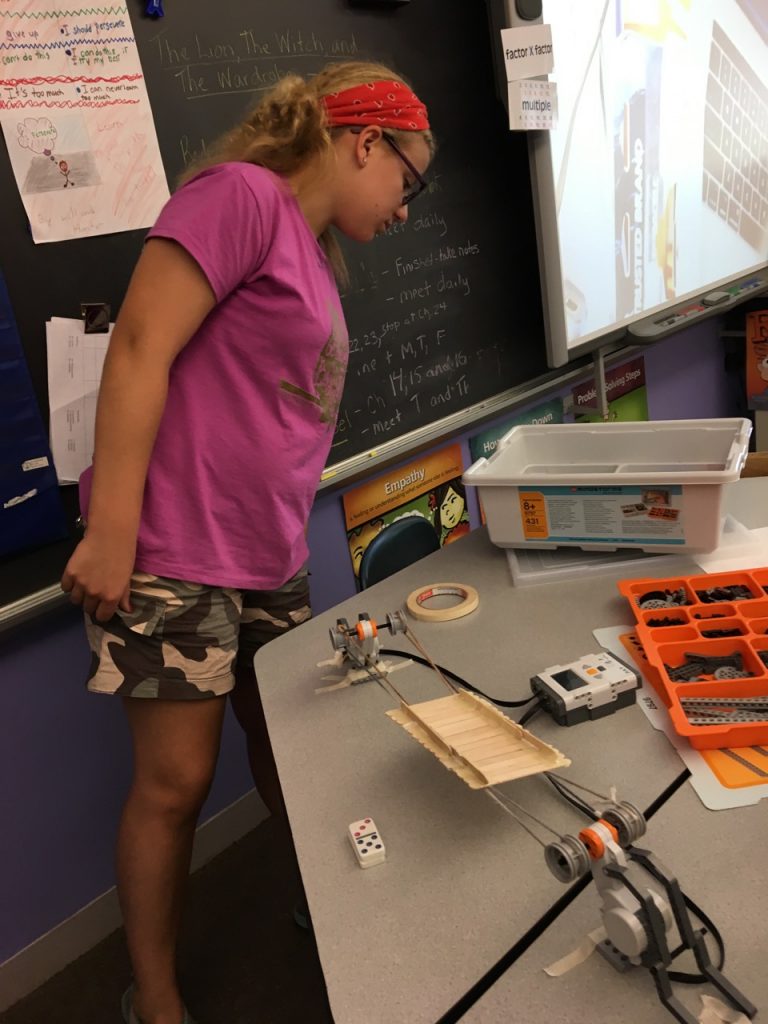
high school student carefully building his bridge according to his 1:1 scale plan.  

Posted in Child Development, Research, Teaching | Leave a comment

Engineering Projects Help Add Common Sense to Math

In my Make Your Own Dragster unit, middle school students first calculate the velocity of a non-geared up robot car, in this case Riley Rover. They take three time measurements on a ten foot course. I observed that students do not have a common sense, deep understanding of the mathematics. My thesis is that this comes from years of largely doing calculations on worksheets removed from any real world context.

Example 1 – Average of 1.73, 1.73, 1.173

Students used calculator, made a mistake and got an answer that was not 1.73 and did not notice a problem. If students had an understanding of what average means, they would know that they did not need to calculate and the answer is 1.73.

Example 2 – Average of 2.78, 2.50. and 2.30

Students got an answer of 7.20 and did not notice a problem. Students with a conceptual understanding of average should have seen that their answer was not reasonable and the average should be 2 point something.

Example 3 – Students write answers like 2.434566 ft/sec and do not notice an issue.

Students should know that the measurement variation and errors make digits beyond one decimal point meaningless.

Of course, it was a great opportunity to discuss all these examples with the class.

Engineering really makes mathematics meaningful, useful, and ties it to the real world. The danger of years of mathematics education largely out of context is that students focus on getting the calculations right and not really understanding the concepts behind the calculations.

Posted in Robotics, Teaching | Leave a comment

Baseball Coaching – the RAPA Method – Repetitions, Accountability, Proofing, Attitude

Posted in Baseball, Coaching, Kids, Sports | Leave a comment

ISTE Webinar on My Research Online

https://drive.google.com/file/d/1h6DuyxUoFpcx1Nj_WJc-pZiVJsS-IBZO/view

Posted in Research, Robotics, Teaching | Leave a comment

Book Now Out on Kindle

Posted in Robotics, Teaching, Technology | Leave a comment

Interview From PBS Connecting Point

Posted in Child Development, Research, Robotics, Teaching | Leave a comment

Engineering Is Egg-citing Day

I can’t thank you enough for everything you did for Engineering Day. I have received incredibly positive feedback from students and teachers. One student said it was the biggest highlight of the year!

Kate Arsenault, Library/Media Specialist

Wow! Thank you, John! What an amazing day! One of the very best days that I have seen in any school. 100% engagement from all students!!! The pics are amazing! I can’t thank you enough!

Kristen Gordon, Principal

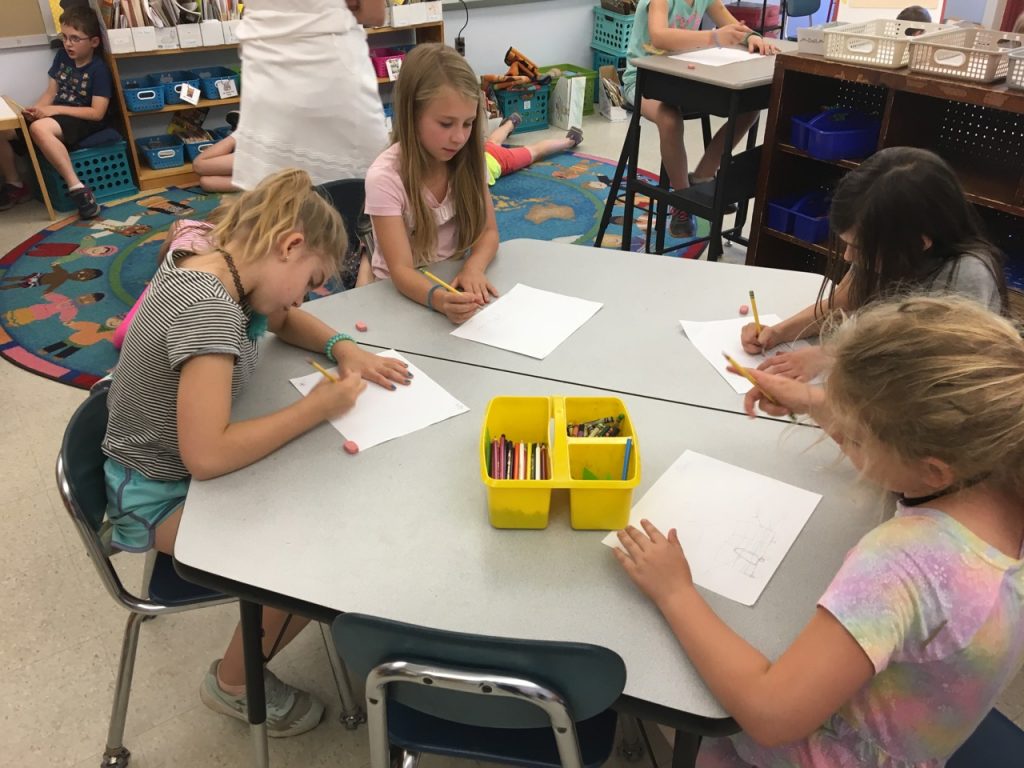
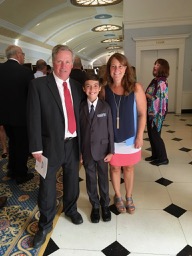
My 6thgrade son graduates from our small, rural elementary school in Western Massachusetts this year.  I had struggled  for many years to try to bring in some robotics-based engineering experiences to the school.   However, a new principal and new library/media specialist were very excited about the prospect so we worked together to create a PK to engineering day. I racked my brain for a while to try and come up with a cohesive theme.  I was finally inspired by the egg drop challenge the first-grade teacher does every year at the nearby elementary school where I teach.  We expanded on that idea to create engineering challenges based on eggs.  At the kick-off assembly, we did a skit where farmer Kate explained that she needed help with transporting eggs around the farm and we challenged each class to help her with a specific task.

  • PK students reported on progress of each class back to the principal
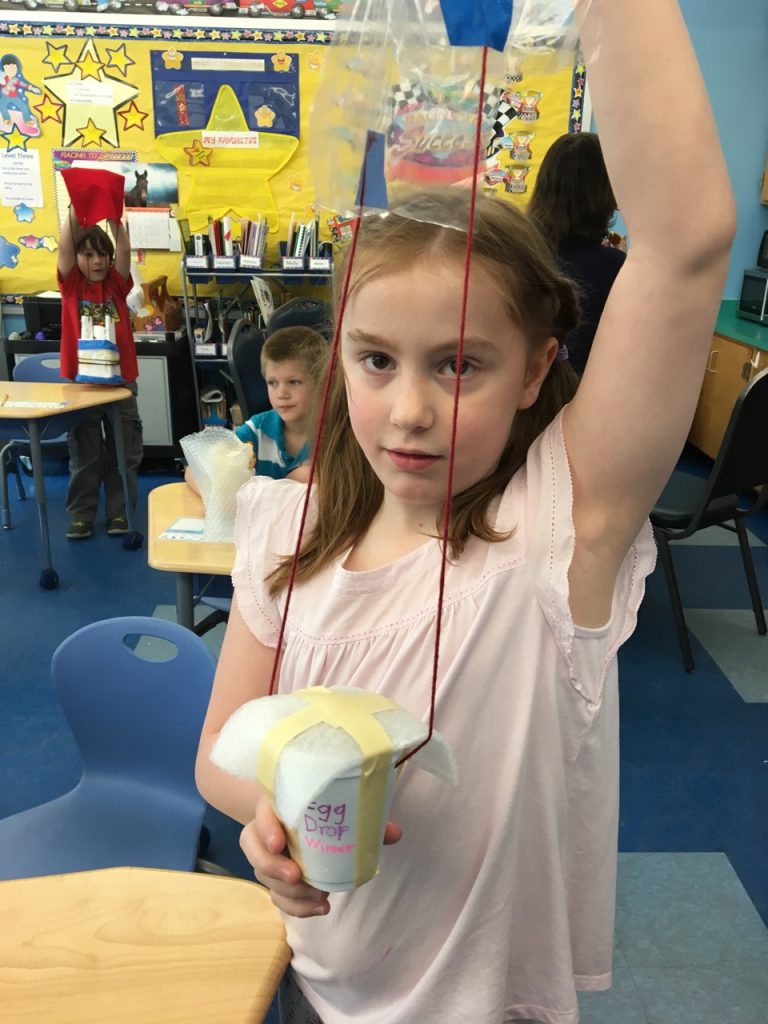
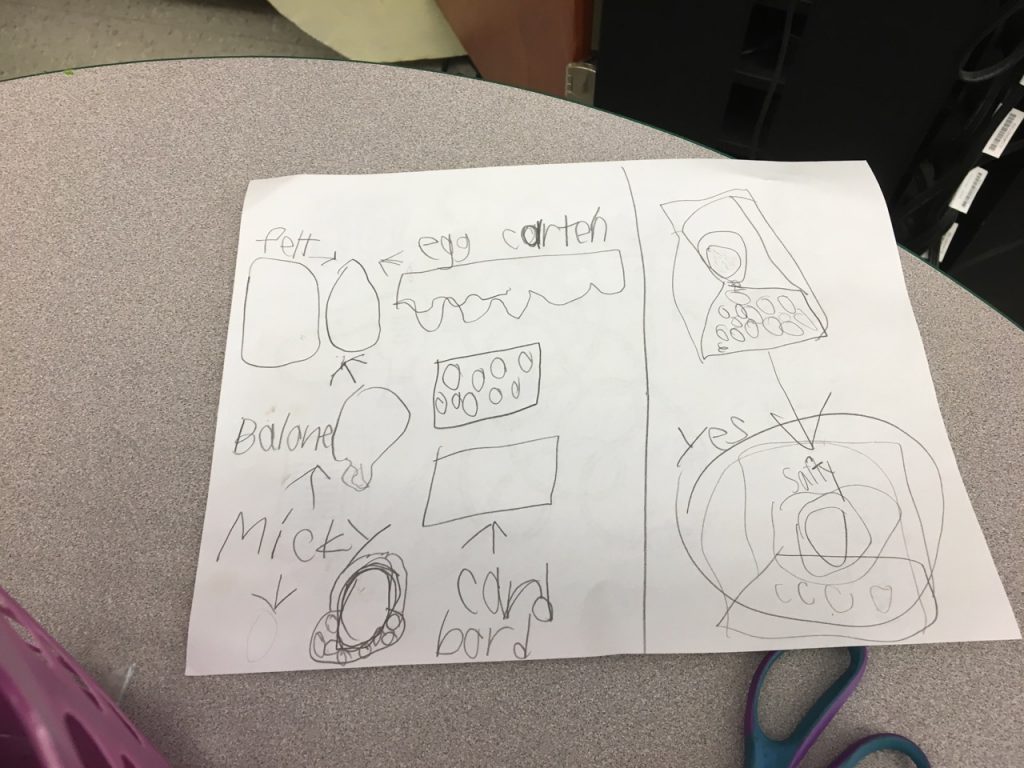
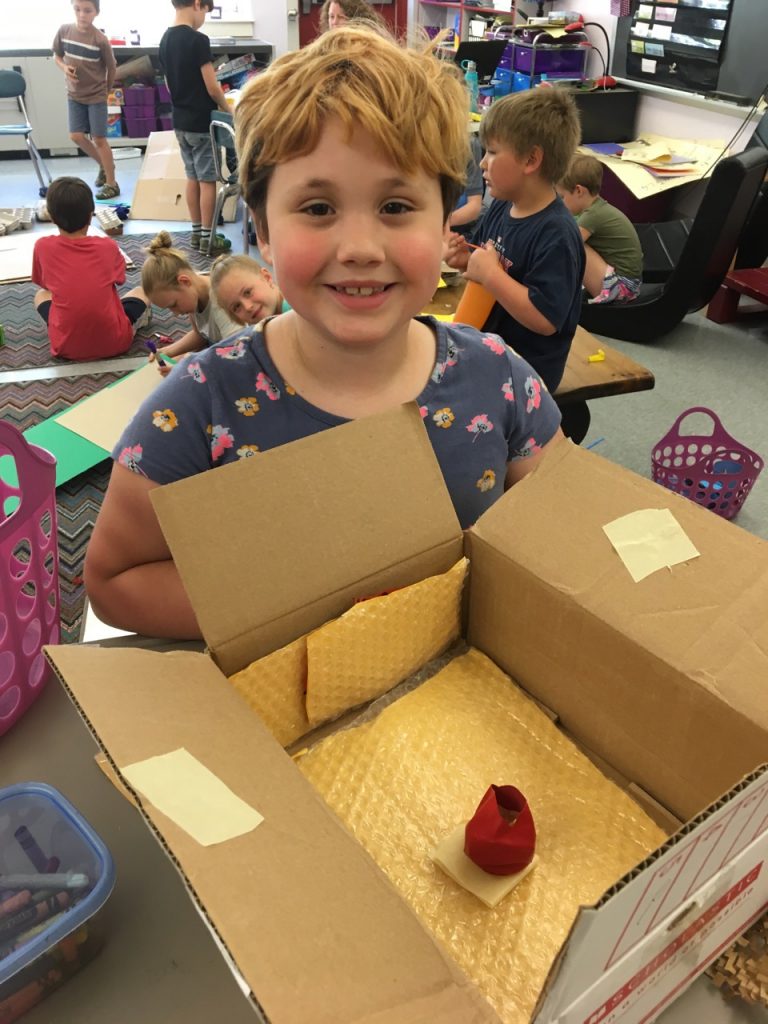
  • K and grade 1 students did a traditional egg drop challenge where the designed some kind of container to protect and egg from breaking when dropped off a fire truck at the end of the day assembly outside
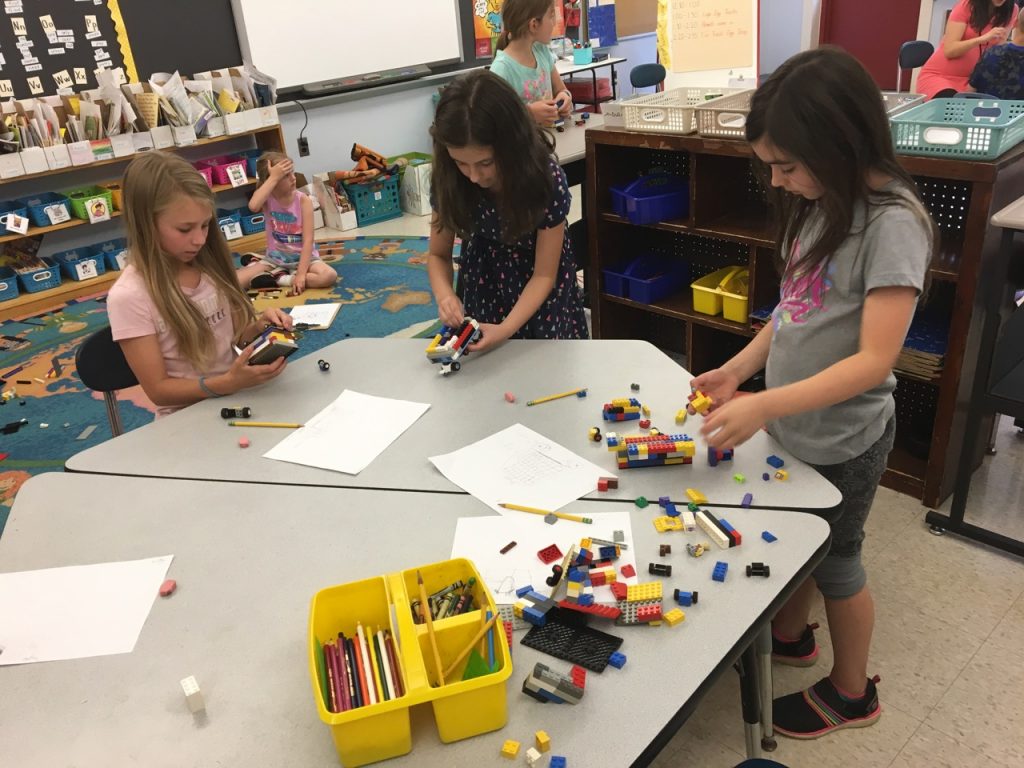
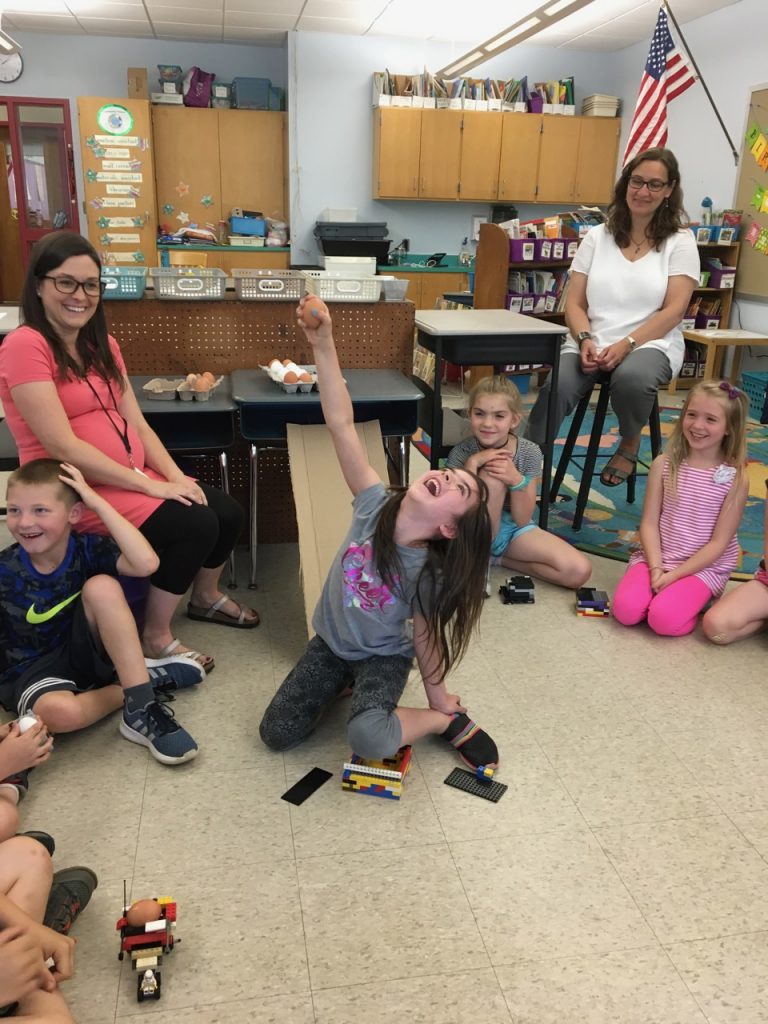
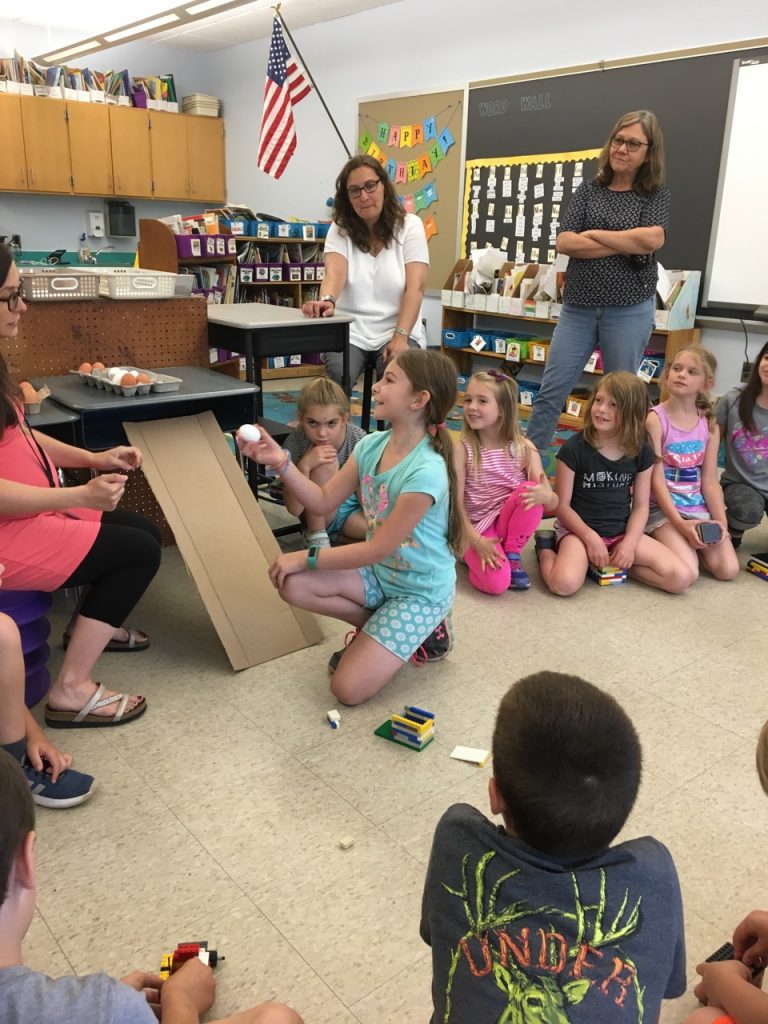
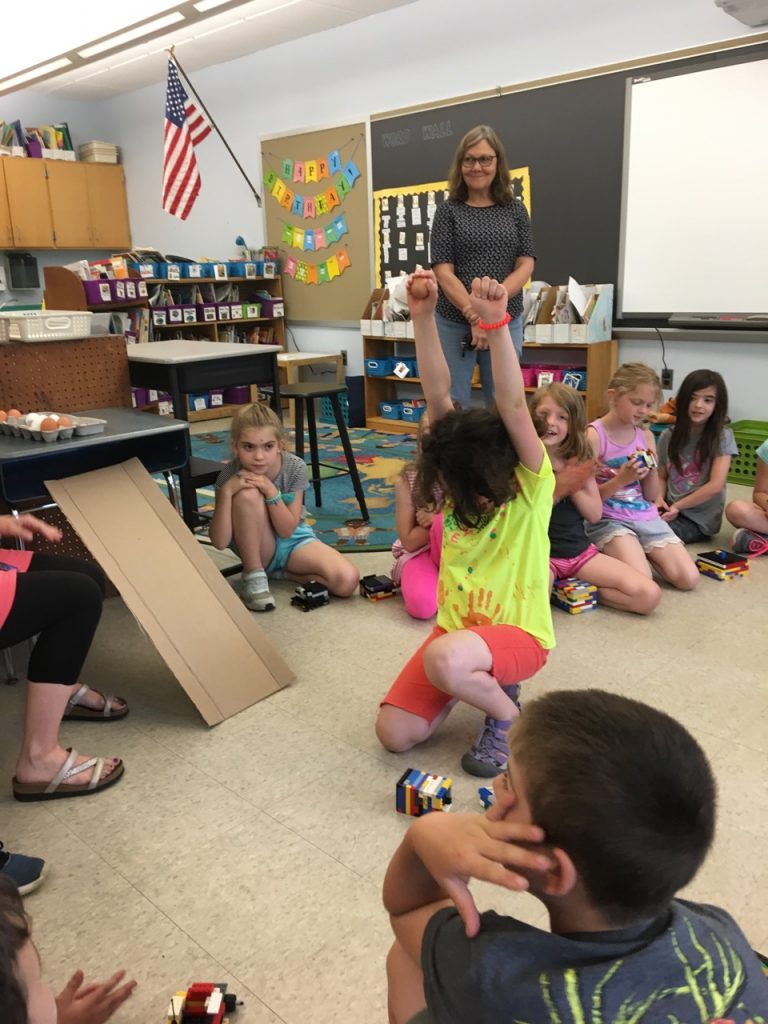
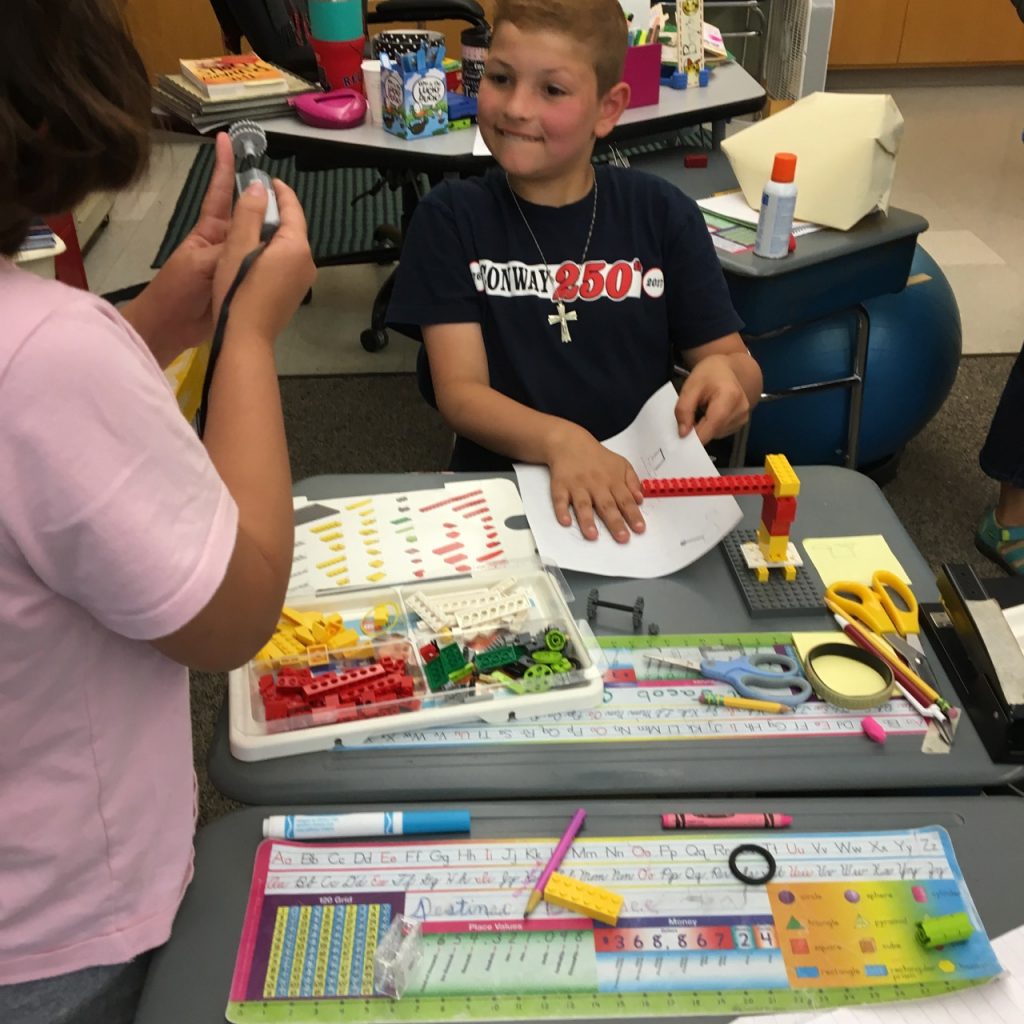
  • Grade 2 students designed non-robotic LEGO egg vehicles that could drive down a ramp and not break the egg inside
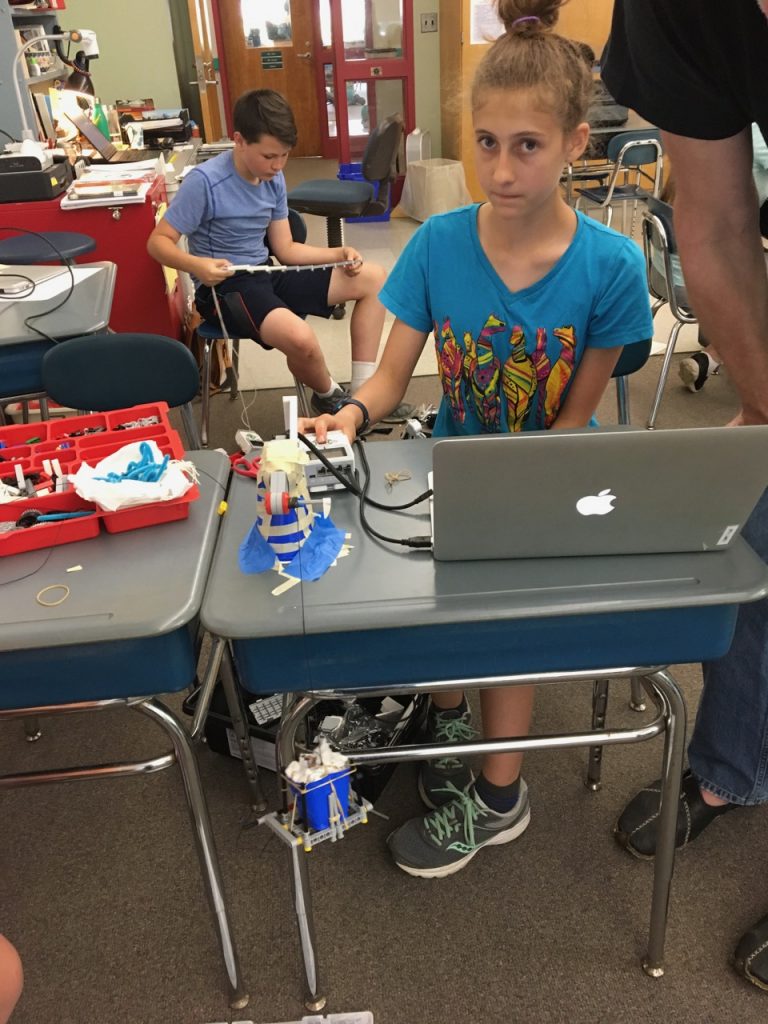
  • Grade 3 students designed robotics egg mixers and optionally included craft materials
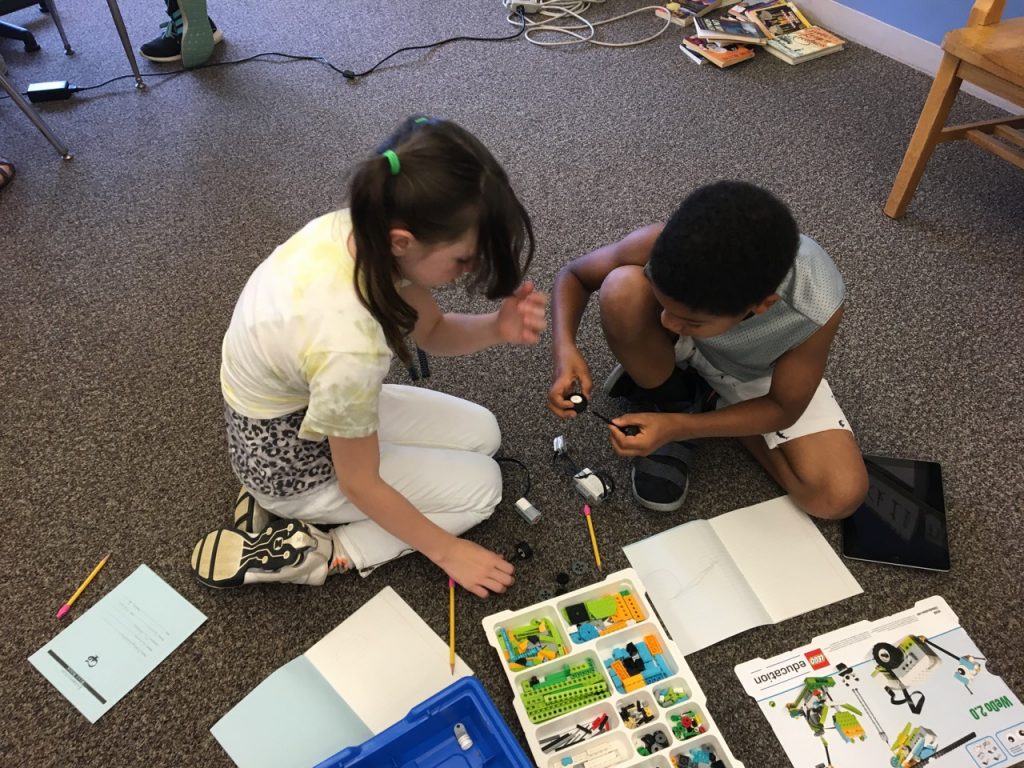
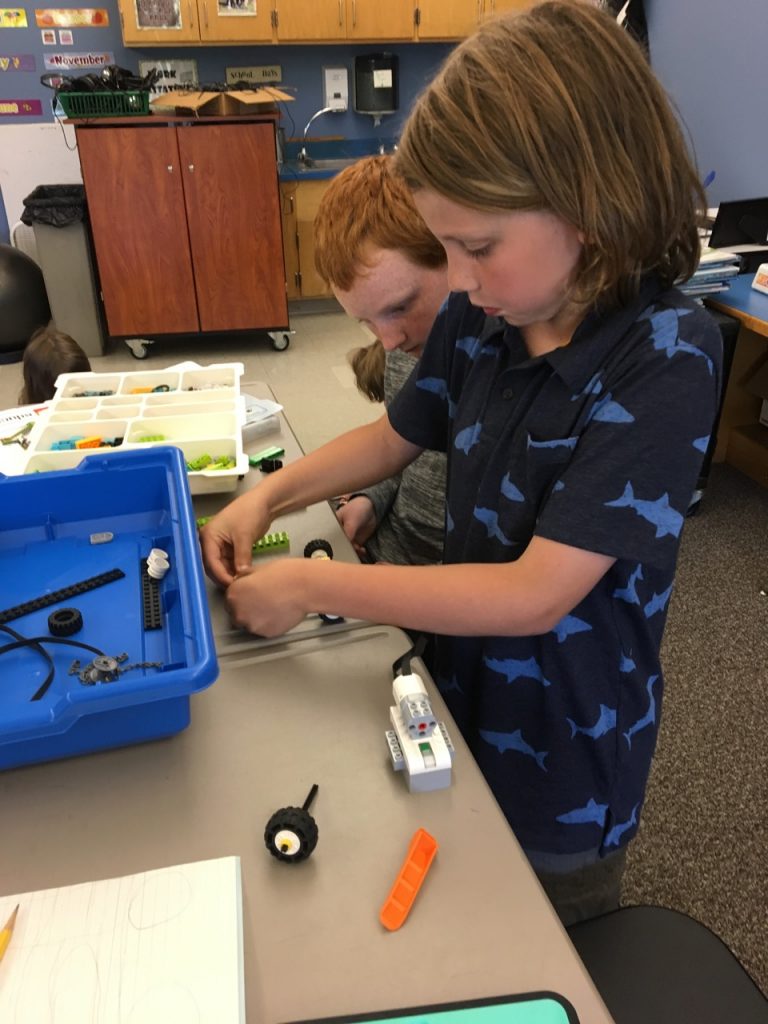
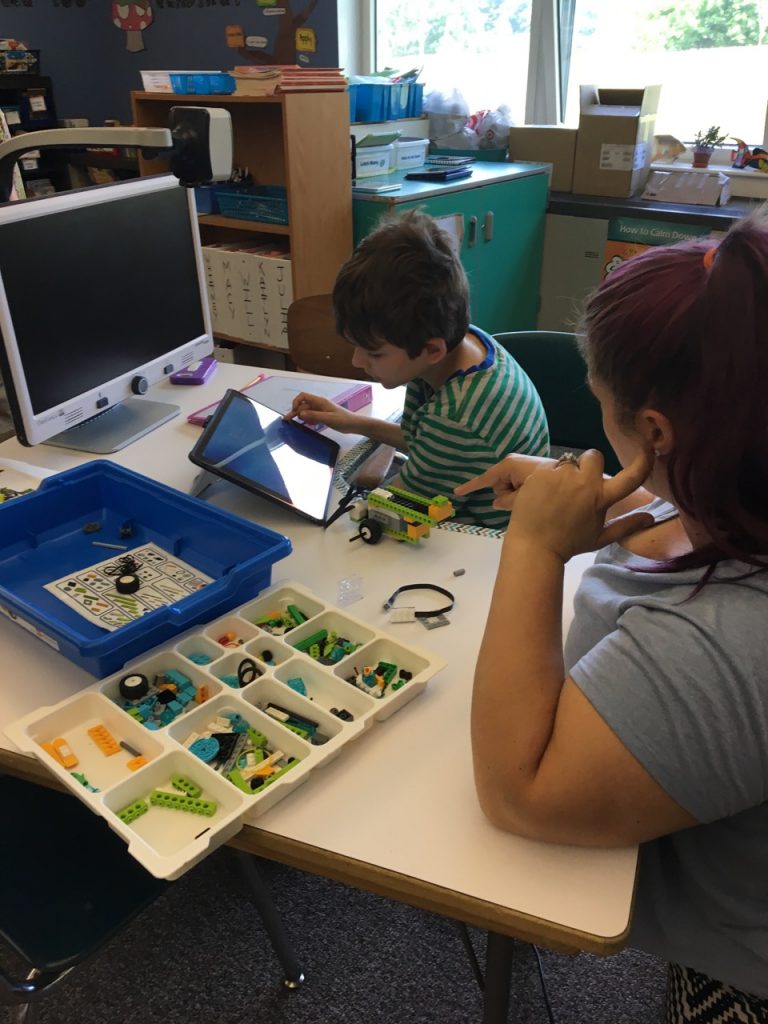
  • Grade 4 students designed robotic cars using LEGO WeDo 2 kits and Apple iPads
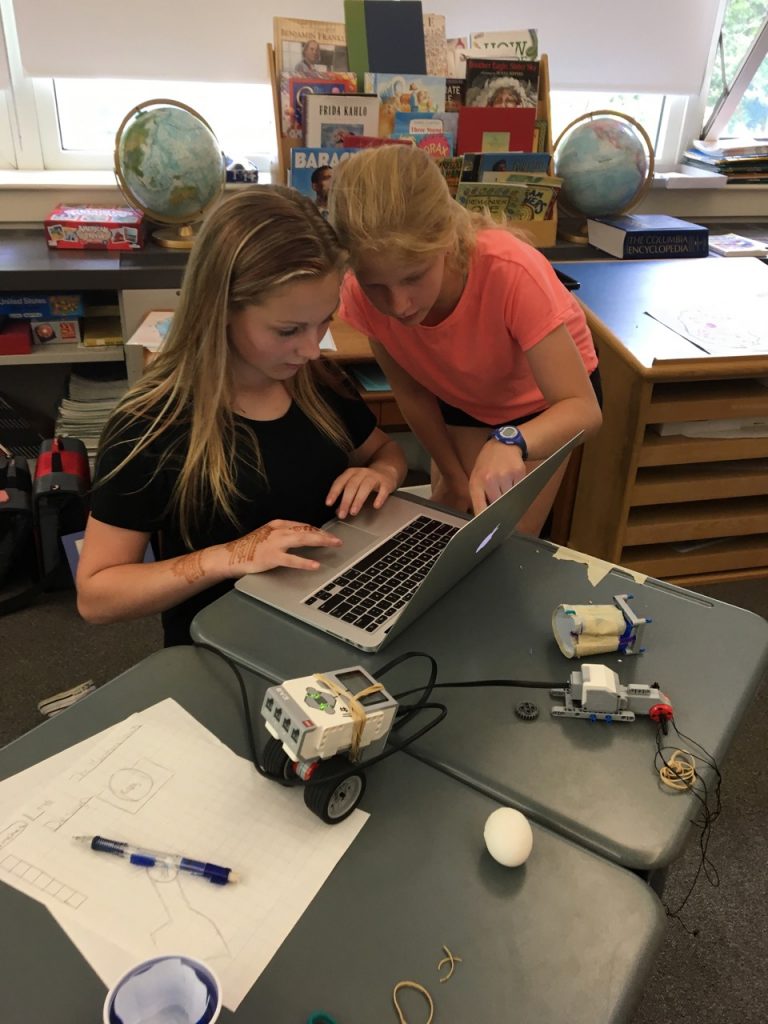
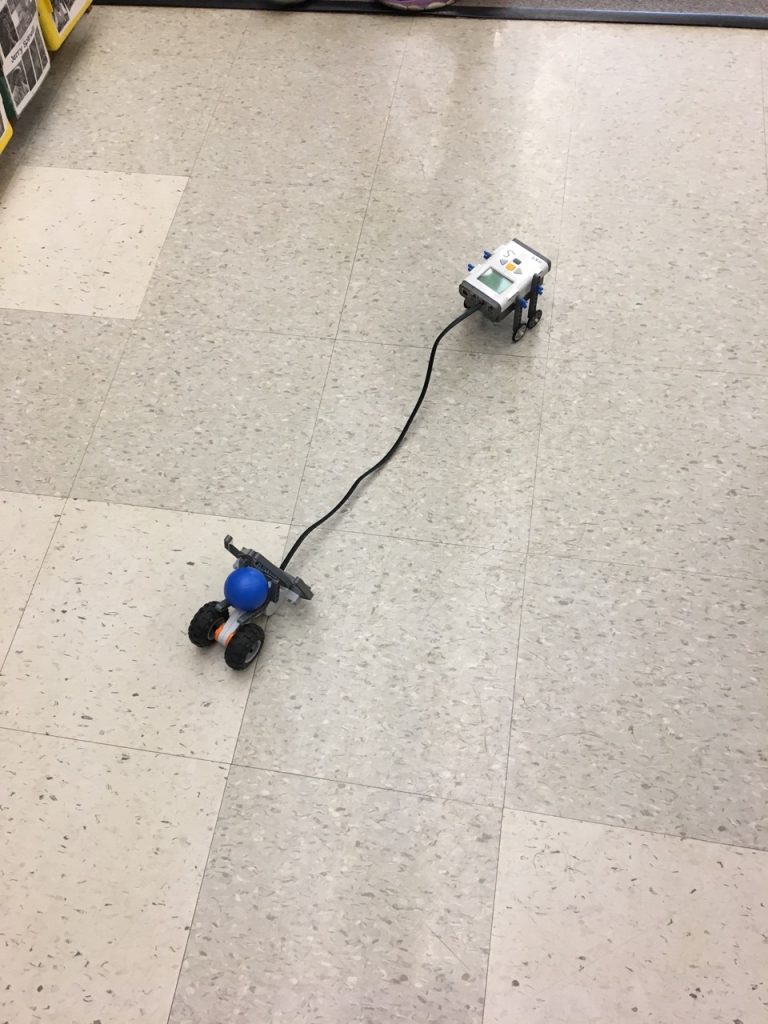
  • Grade 5 students designed devices that transported eggs horizontally with LEGO NXT robots and EV3 software
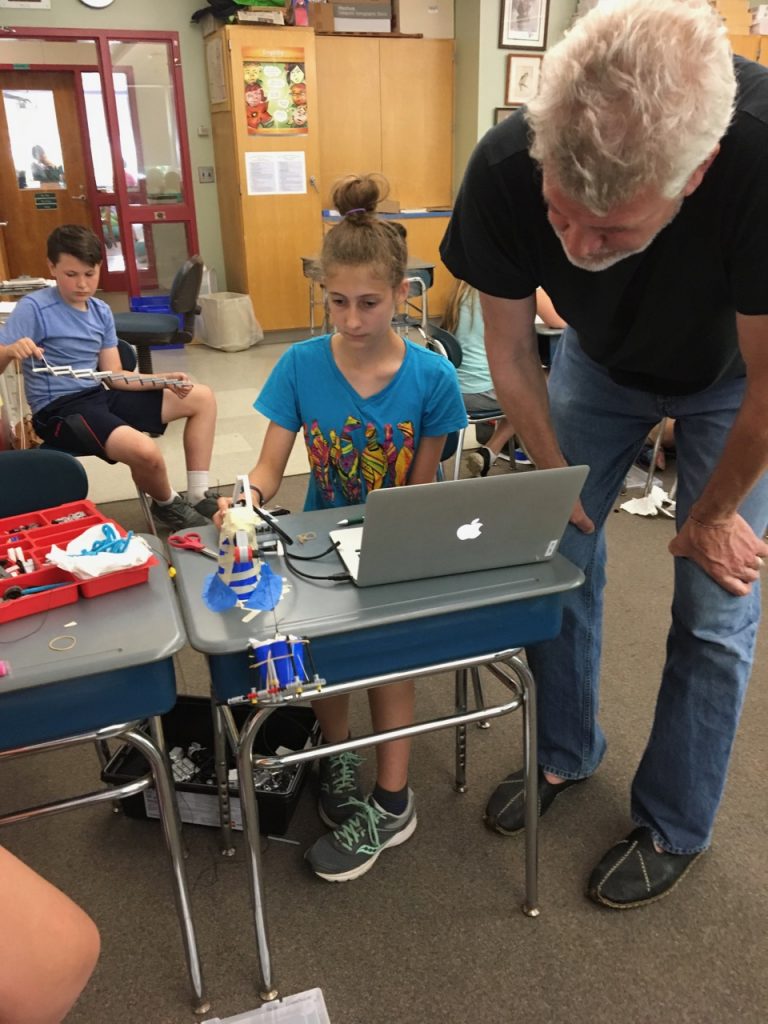
  • Grade 6 students designed egg lifter devices that transported an egg from the floor to a table

All classes had craft materials available and, in most cases, needed them to create some kind of egg holder. We mostly used hard boiled eggs but grade 1 students decided to use raw eggs for their final egg drop test.

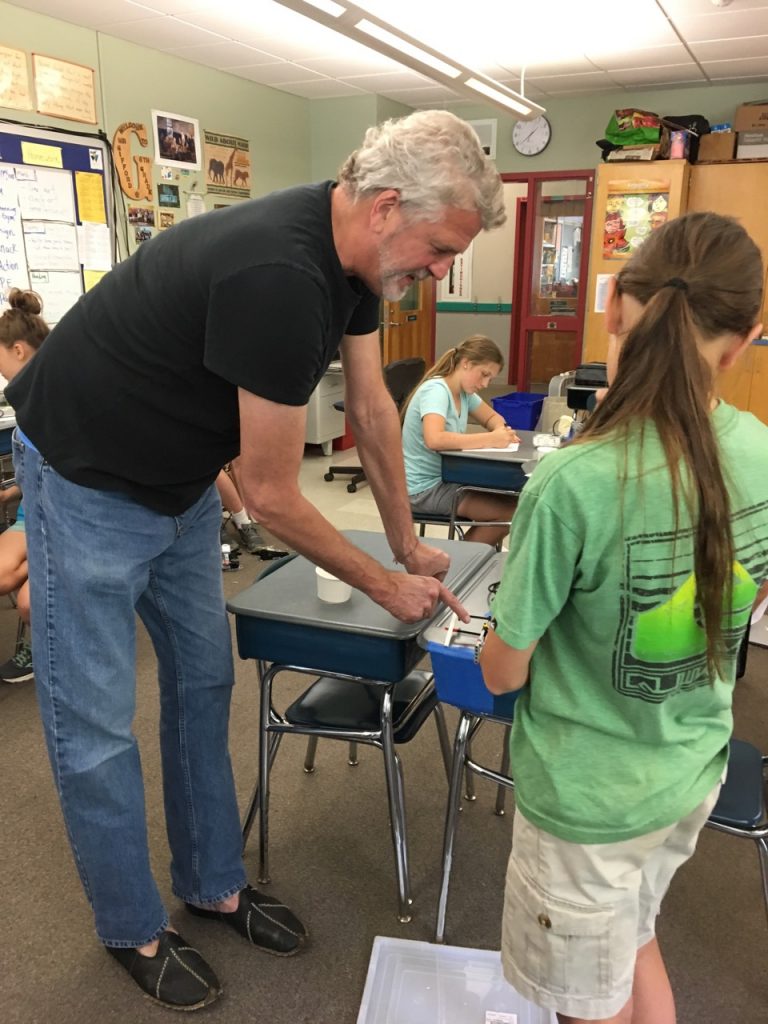
While it was challenging at times to get around to multiple classes to check in and give help, it was very interesting and exciting to see kids K-6 all doing engineering challenges at the same time.  Kids (and teachers) were fully engaged and so proud to show me what they had created.  I also saw great collaboration and cooperation as most kids worked in teams to accomplish the task.  As I returned to classes, I was amazed at how designs had grown and changed during my absence.  I scaffolded as needed for students who were stuck or needed technical help.  We had minimal connection or technical issues with the various LEGO software we were using.  Students, especially fifth graders, made interesting physical connection with LEGO and non-LEGO materials.  Some of the most rewarding moments were when I saw students with various visual, emotional, or learning issues succeed alongside their peers and were literally be beaming about their work.  I got reports from parents and kids at our local swimming hole about kids who were still talking about the day at home or told me directly that it was “amazing”.  I was so happy to be able to provide this experience to my son and all the kids in our small town.

*Thanks to the teachers, administration, and students of the Anne T Dunphy School for letting us use the robotics kits and laptops for a day!

Lots of photos but check out this video of this second grader  testing his final LEGO egg carrier car.
Posted in Robotics, Teaching, Technology | Leave a comment

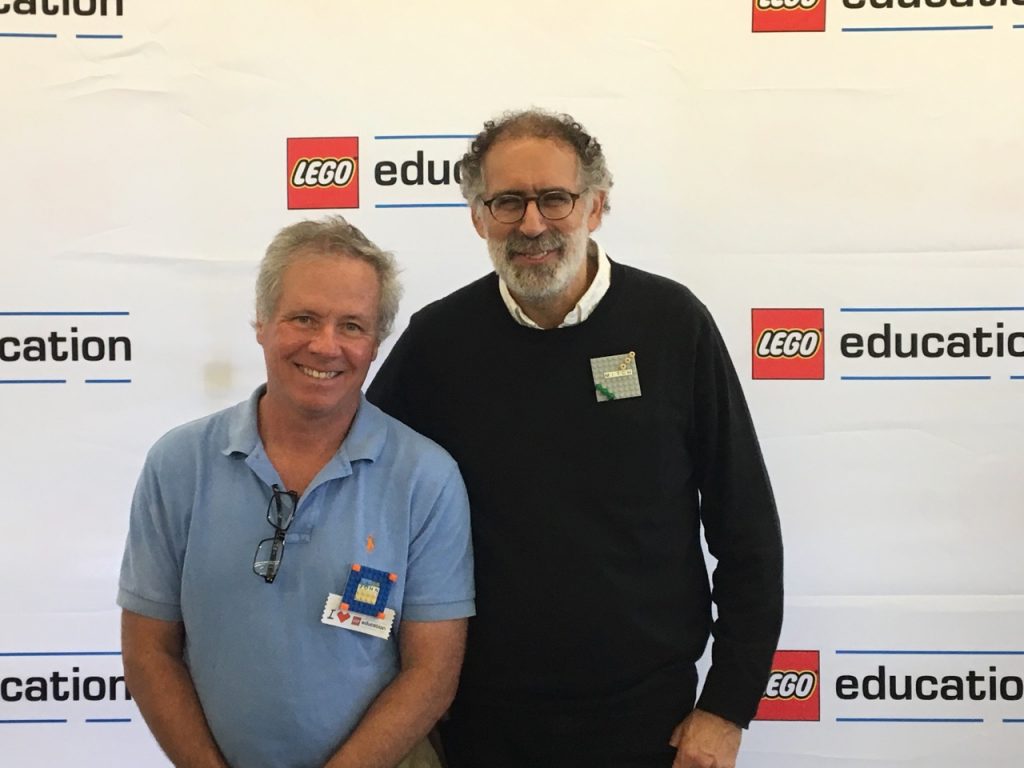
LEGO Education Master Educator Meet Up with Mitch Resnick

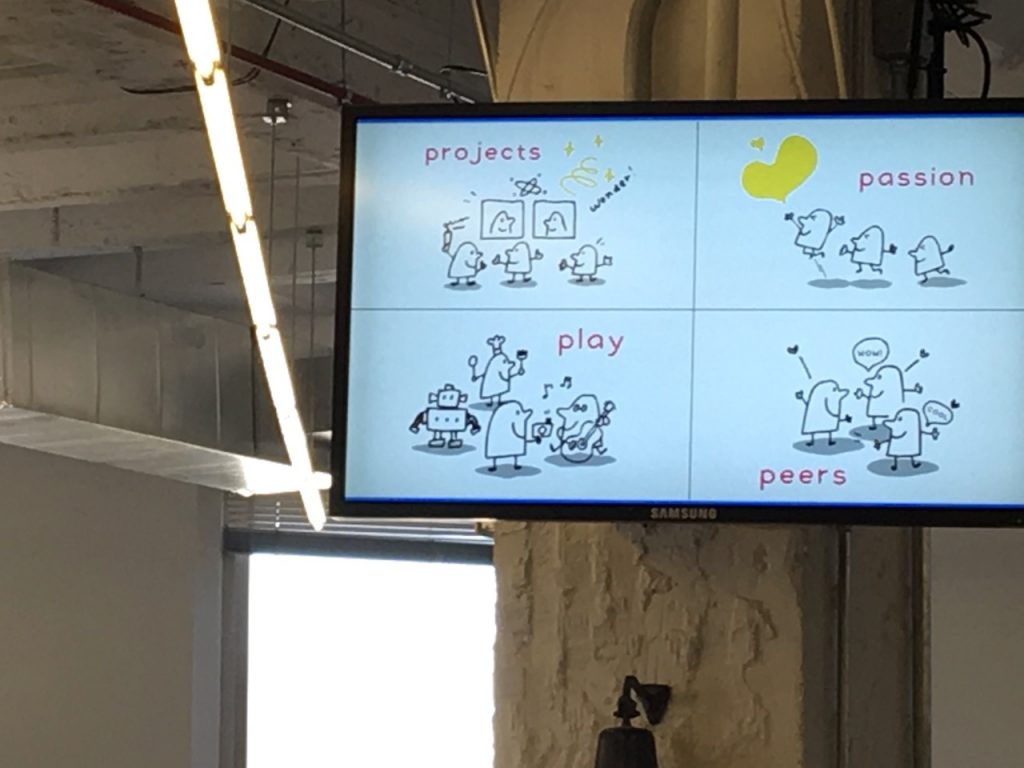
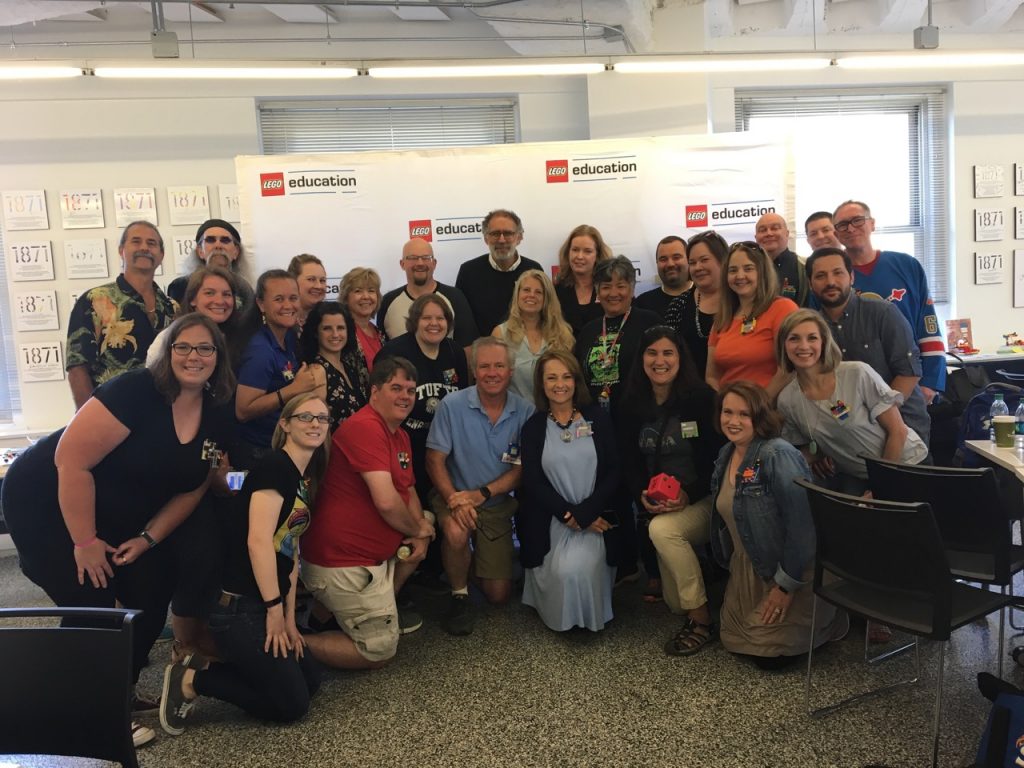
I was recently honored to be named a LEGO Education Master Educator (and an advisor to the group).   We met recently in Chicago for a day long event.  I got to chat a bit and hear the keynote from Mitchel Resnick, known as the inventor of the Scratch programming language.  He is the  LEGO Papert Professor of Learning Research at the MIT Media Lab and has been advocating the concept of Lifelong Kindergarten, the idea of bringing playful and creative kindergarten attitude to the rest of school and, indeed, to life.  Unfortunately, the push now is in the opposite direction, of pushing play out of kindergarten.  Mitchel is the intellectual heir to his mentor Seymour Papert, who pioneered the notion of educational technology with his LOGO programming language.  Papert also came up with the notion of constructionism, the idea that children create knowledge best in the context of creative  hands on activities.   Resnick  has created a model of projects, passion, play, and peers to help illustrate and define his notion of lifelong kindergarten.   Both Papert and Resnick has inspired my own practice of creating K-6 engineering experiences and also intensively studying the engineering processes of elementary children.


Posted in Child Development, Research, Robotics, Teaching, Technology | Leave a comment

PAEMST – Presidential Awards for Excellence in Math and Science Teaching

I received this award a few years back and I encourage others to apply.  It’s a great experience to video yourself, really analyze what you are trying to do, and get feedback from the NSF reviewers. Here’s some info on the award.

The Presidential Awards for Excellence in Mathematics and Science Teaching (PAEMST) are the highest honors bestowed by the United States government specifically for K-12 mathematics and science (including computer science) teaching. The 2017-2018 nomination and application period for K-6th grade is currently open.

The awards were established by Congress in 1983. The President may recognize up to 108 exemplary teachers each year. Awards are given to teachers from each of the 50 states, the District of Columbia, the Commonwealth of Puerto Rico, the Department of Defense Education Activity schools, or the U.S. territories as a group (American Samoa, Guam, the Commonwealth of the Northern Mariana Islands, and U.S. Virgin Islands). PAEMST recognizes those teachers who develop and implement a high-quality instructional program that is informed by content knowledge and enhances student learning. Since the program’s inception, more than 4,700 teachers have been recognized for their contributions in the classroom and to their profession. Presidential awardees receive a certificate signed by the President; a trip to Washington, D.C. to attend a series of recognition events and professional development opportunities; and a $10,000 award from the National Science Foundation (NSF). The National Science Foundation administers PAEMST on behalf of The White House Office of Science and Technology Policy.

Please consider nominating a talented science or mathematics teacher using the PAEMST website today. If you are interested in applying yourself, you can begin an application at www.paemst.org. The 2016-2017 nomination deadline is April 1, 2018, and the application deadline is May 1, 2018.

Posted in Research, Robotics, Teaching, Technology | Leave a comment

Two Speeds at Once

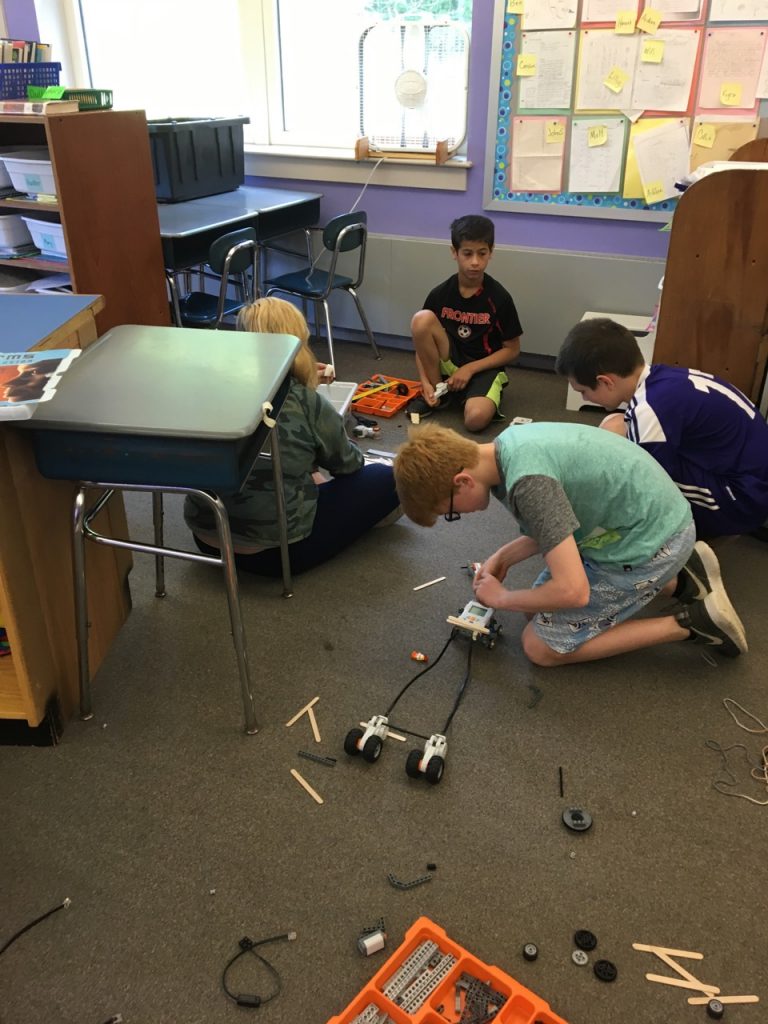
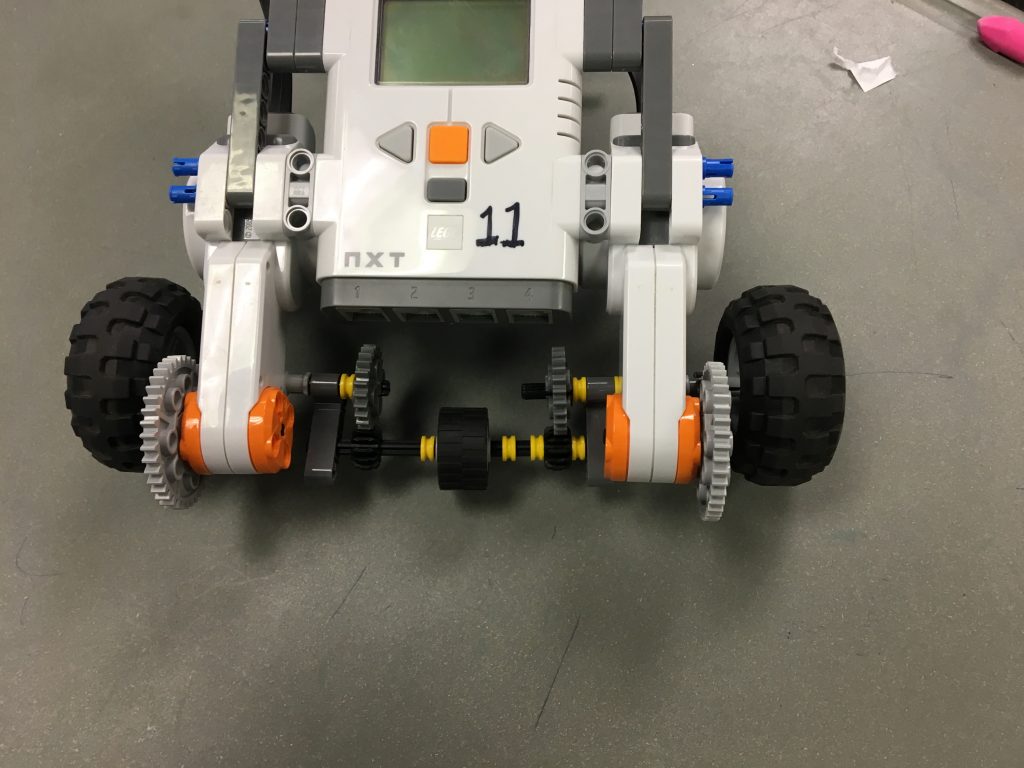
This photo shows one of the common issues I see with our grade 6 make your own dragster project.  Frequently, kids try to have different wheels on the same car go at two different speeds at the same time.  Not sure if this has to do with causal reasoning or a lack of structural knowledge of gearing or something else.


Posted in Child Development, Research, Robotics, Teaching, Technology | Leave a comment