We recently went back to our old building as a staff to see how far we have come. Here are photos of our new and old tech labs. Can you identify the newer lab?
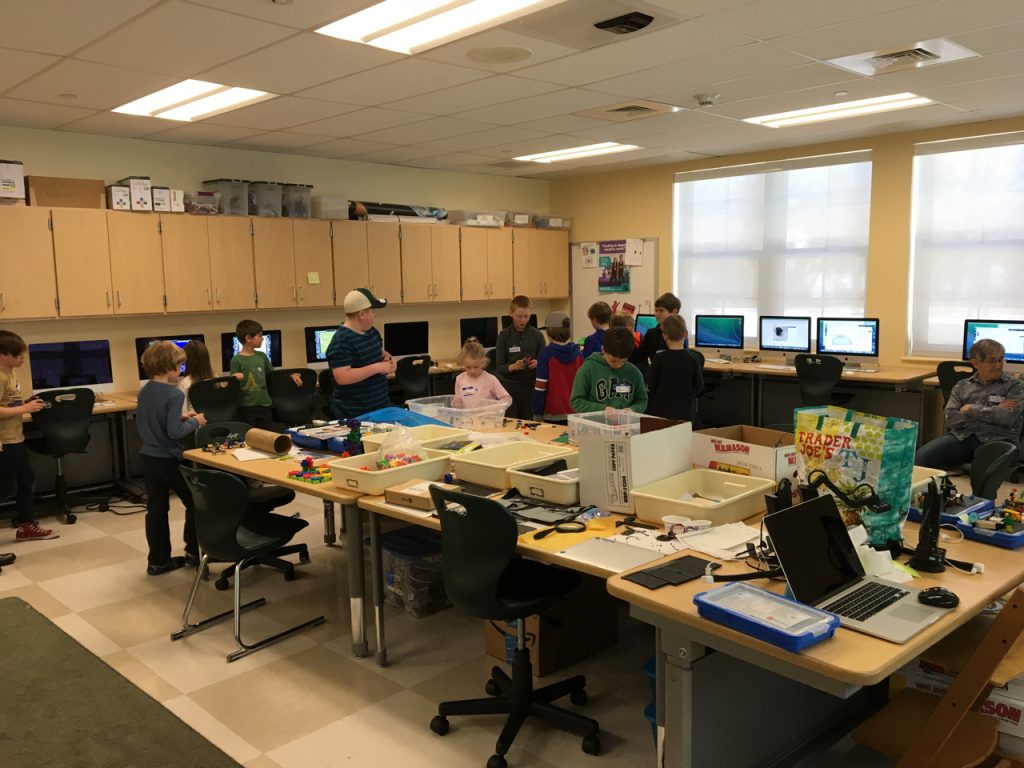
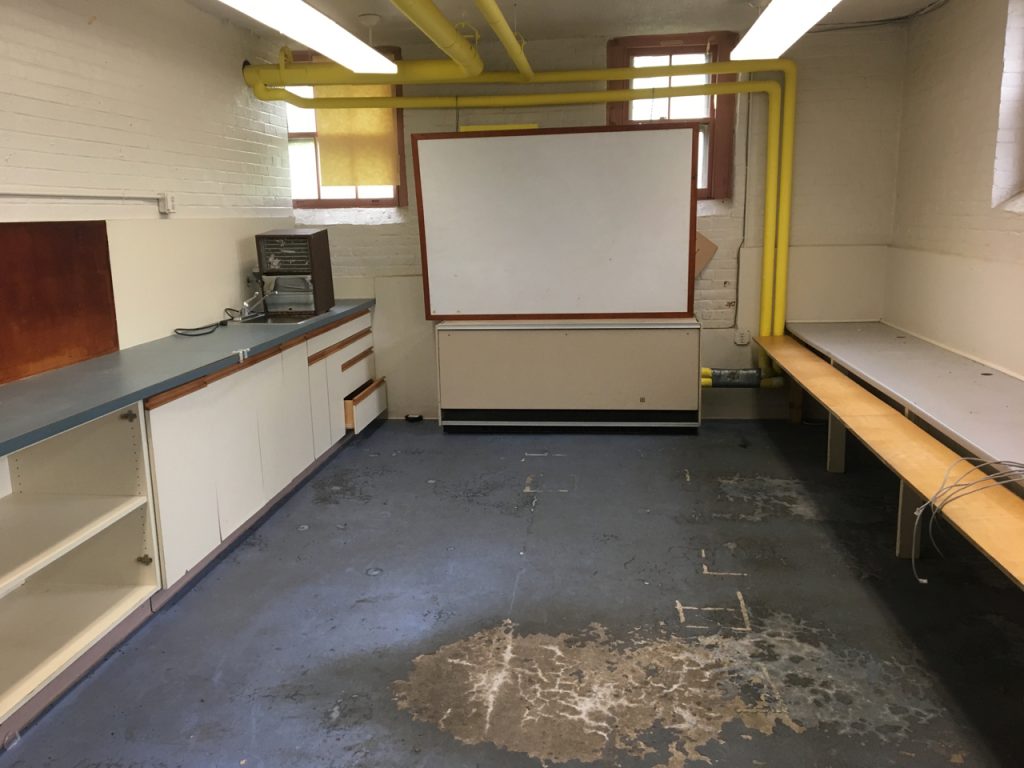
We recently went back to our old building as a staff to see how far we have come. Here are photos of our new and old tech labs. Can you identify the newer lab?
This fall, I had indoor recess duty (usually a dreaded duty) with a first grade class. I noticed that many of them busily working on (some might say obsessed with) some ants that had been seen in the classroom. They had formed an ant squad to handle the problem. They were drawing plans, looking around the room, and designing paper constructions to handle the ants.
Now, I had a few choices here. I could tell them not to worry about the ants and assign them some other activity. I could take the “ants are people too” approach and urge/require them not to interfere with the ants. I could ignore the kids and let them continue their ant squad unimpeded by adult action.
I decided not to take the usual adult approaches. I decided to really take time to really find out more about the ant squad. The kids were very excited that I was going to join the ant squad and gave me some assignments. I filled an empty spray bottle with some water and gave it to them as an ant spray (knowing it would not hurt anything). They sprayed the ant locations using the bottle. I checked out their drawings and plans and made and shared some of my own.
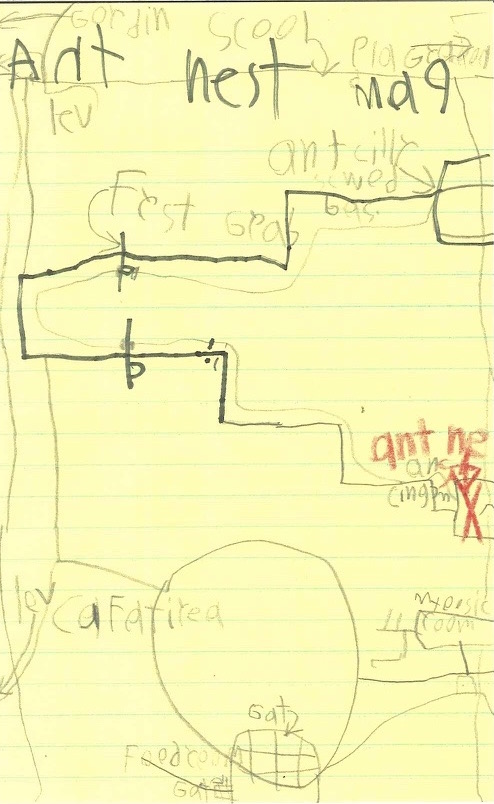
A student came down to the tech lab later in the week and excitedly shared his ant squad plan with me. (See below.) I was reminded of this recently when the same boy told me they had changed the ant squad to the white caterpillar squad at outdoor recess. (Kids have been very afraid of these white caterpillars that some kid are allergic to and adults have warned them about.) I was happy that I had decided to join, get a little glimpse of, and become a part of the kids’ world.
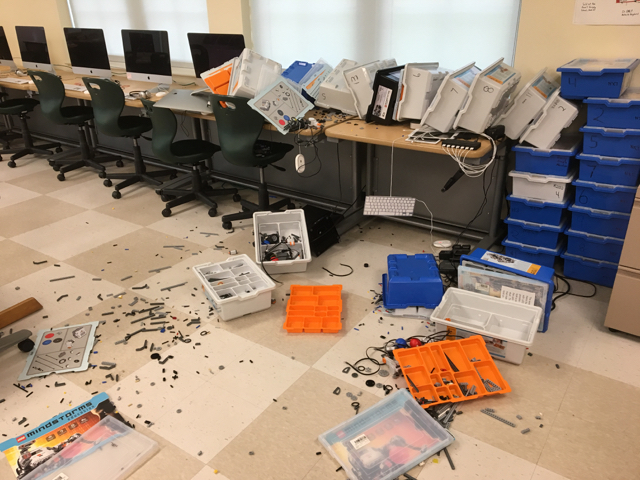
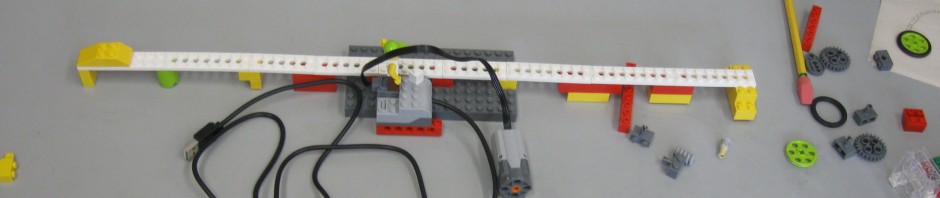
Kids actually cleaned up the part in about 20 minutes. Will have kids resort kits next year.
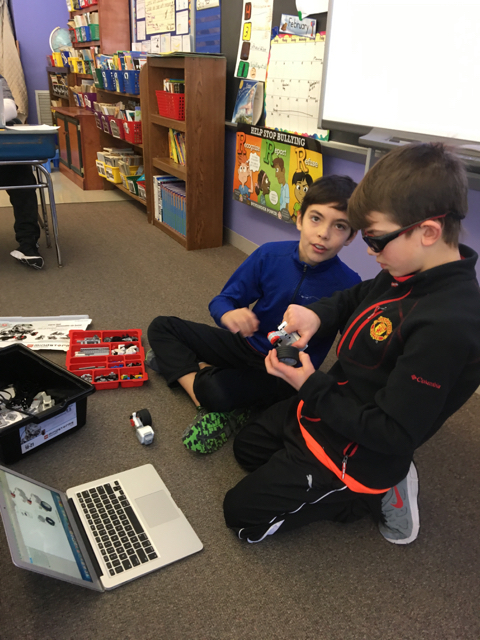
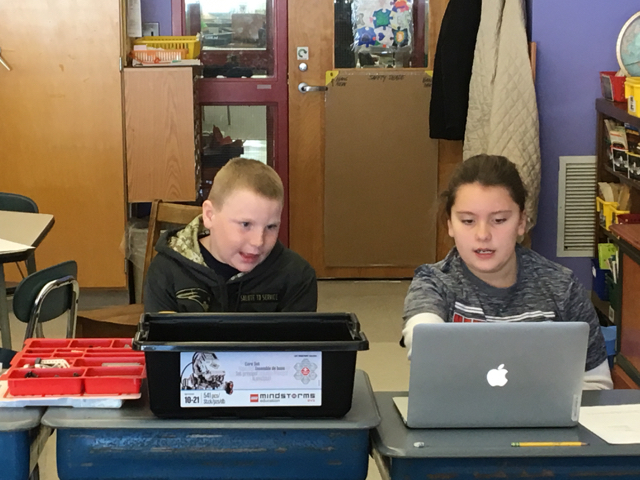
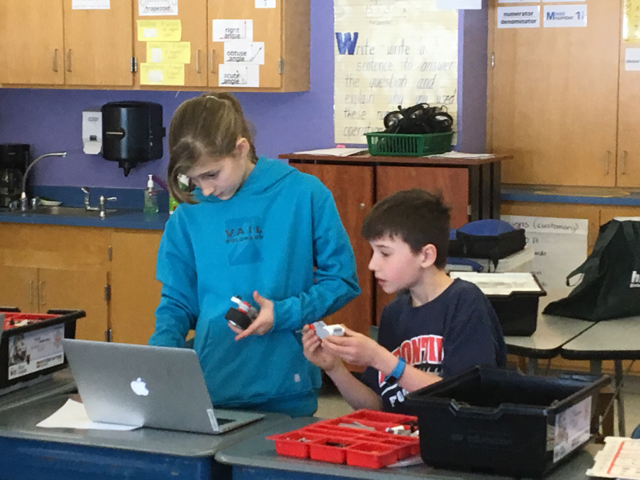
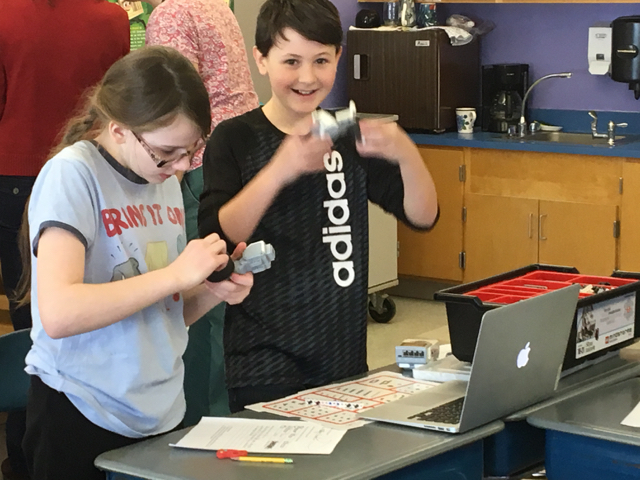
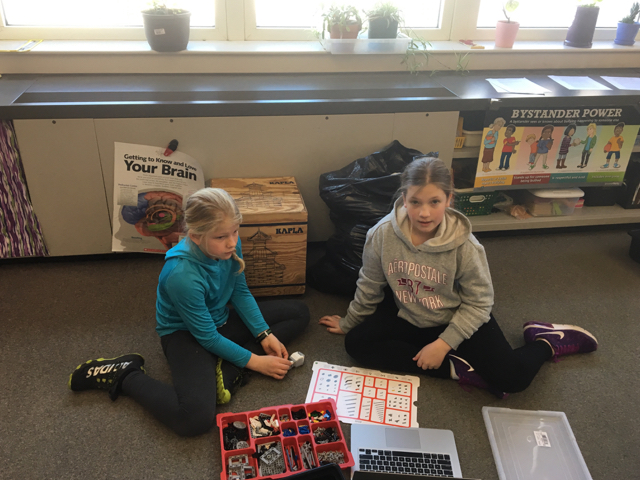
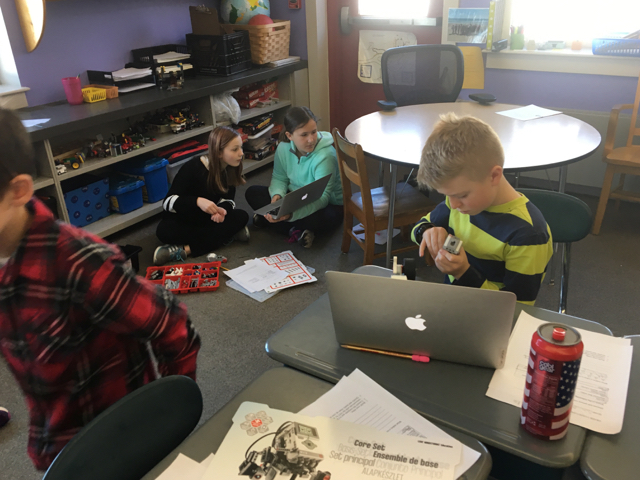
I had the chance to do a robotics day with my son’s fifth grade class thanks to his teacher. What a smart and well-behaved class! They did some super thinking, programing, troubleshooting, and applied math and they seemed to have fun doing it.
I had not tried to do my whole fifth grade curriculum in one day. It worked well. At a certain point, everyone -kids and teachers – were mentally tired so I switched the end up a bit and the kids programmed their robots to do a coordinated line dance together. Great and fun way to finish up and apply their knowledge!
It was fun to work with these kids I know so well from coaching and just being in our small town together. The school has one class per grade so they have all grown up together in school and out.
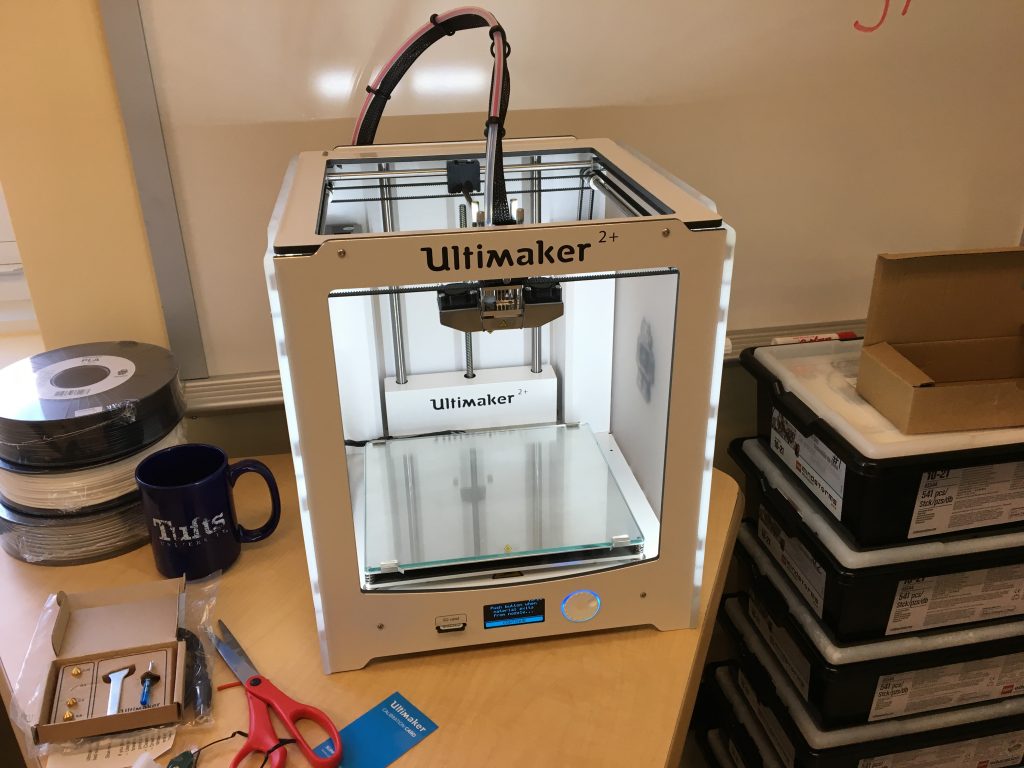
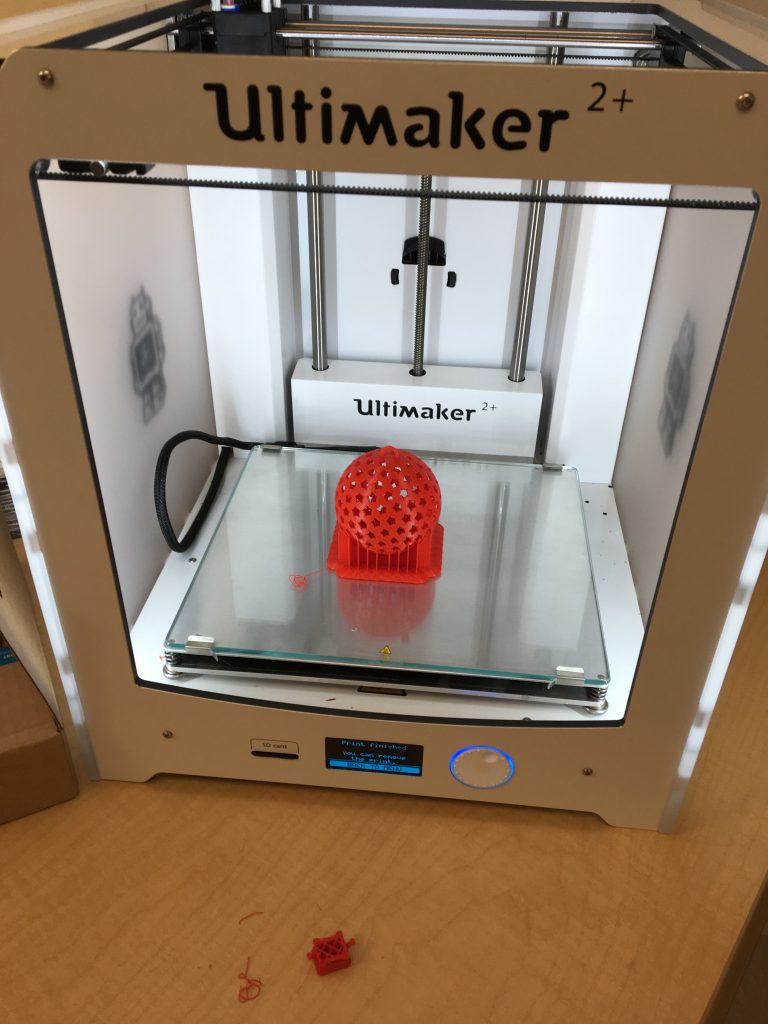
Ultimaker 2+ 3D Printer before it was ever used
BACKROUND
I recently purchased an Ultimaker 2+ 3D printer with some of my prize money from winning a Presidential Award for Excellence in the Teaching of Math and Science. This is now part of the elementary Maker Space I have been creating the last 2 years with seed money from the Williamsburg PTO. Kids can come to the Maker Space on Fridays at recess time if they desire. Students are instructed that they can come and design, create, or invent something. This includes coding. I do tell them it’s not for playing educational apps and games. Typical choices have included 3D printing, LEGOs, additional LEGO robotics, LittleBit circuits, duct tape creations, taking apart old computers, code.org, claymation, Scratch, and Scratch, Jr coding. In this blog post, I am going to focus on some lessons learned and some observations of 3D printing.
STUDENT RESPONSE
Students were fascinated and excited to have a 3D printer from day one. Most students had at least heard of 3D printing. After the initial setup, I decided I would start having elementary students use thingiverse.com to print out existing designs. Thingiverse is a web site where users submit their own designs that other people can print out and/or modify. Thingiverse also has an option (if so designed by the person who submits the design) to configure the design. For example, students could print a keychain with their initials on it. I figured it would be best to start with printing existing designs and work our way up to creating our own objects, which I understand, is a bit tricky for elementary students. I also figured that a major goal should simply be to experience the ability to print out objects.
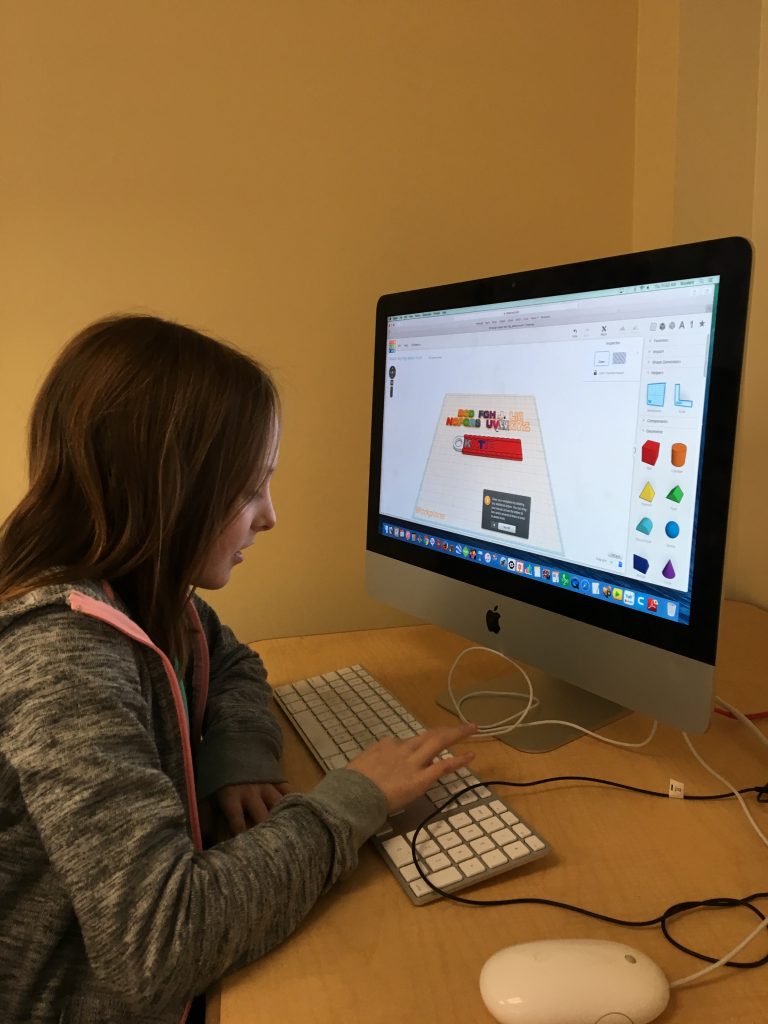
Student learning TinkerCAD to create her own design. This student is very creative and a huge LEGO fan. She has been super motivated to come to Maker Space and pursue her own creative ideas.
The student above is learning how to create her own object using https://www.tinkercad.com, which is a web site where original designs can be created. It includes numerous tutorials. I was very excited to see the first student created design print out, as was she. I did tell her that we would be learning together and she accepted that. I have stressed that point throughout. It is important that students know that sometimes designs do not print out successfully and that we are learning 3D printing together.
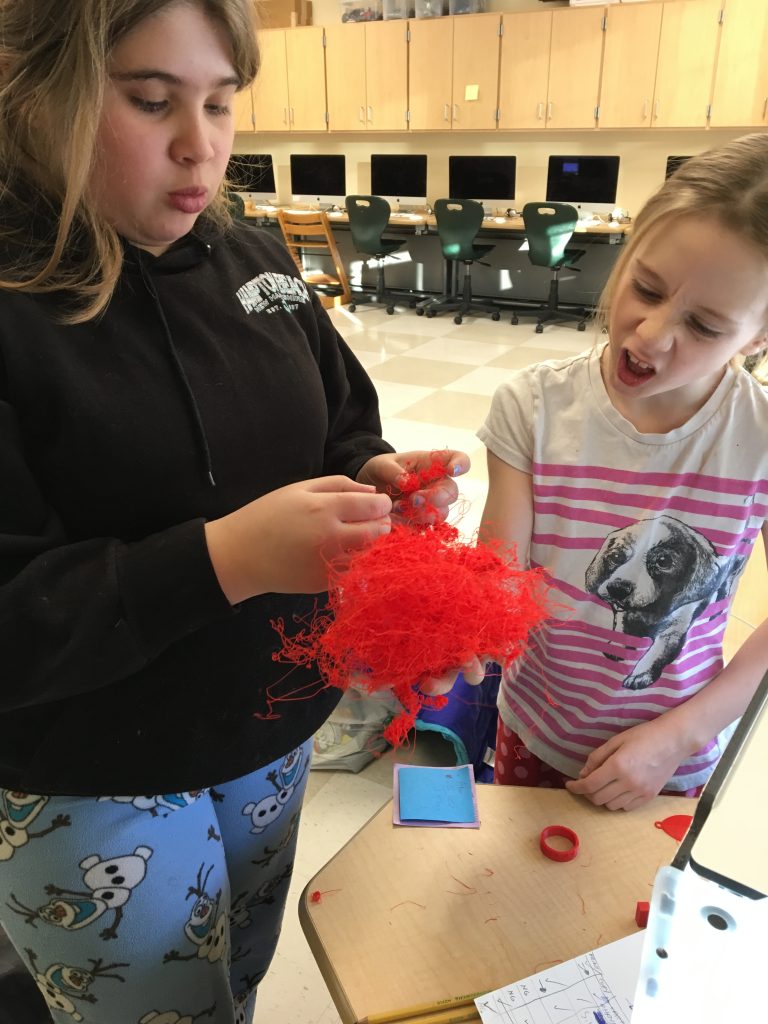
Epic Fail! We have not had success to date printing out models of cars or Imperial Destroyers. When the model detaches from the glass, this happens. It could be that the PLA plastic we use (no fumes) cools and does not stay attached with larger models. We may have to raise the glass temperature for these larger models or use some kind of adhesive substance. Printing a build plate adhesion layer, which is a thin layer of plastic that surrounds the print and can be easily removed later does seem to help but not enough in some cases.
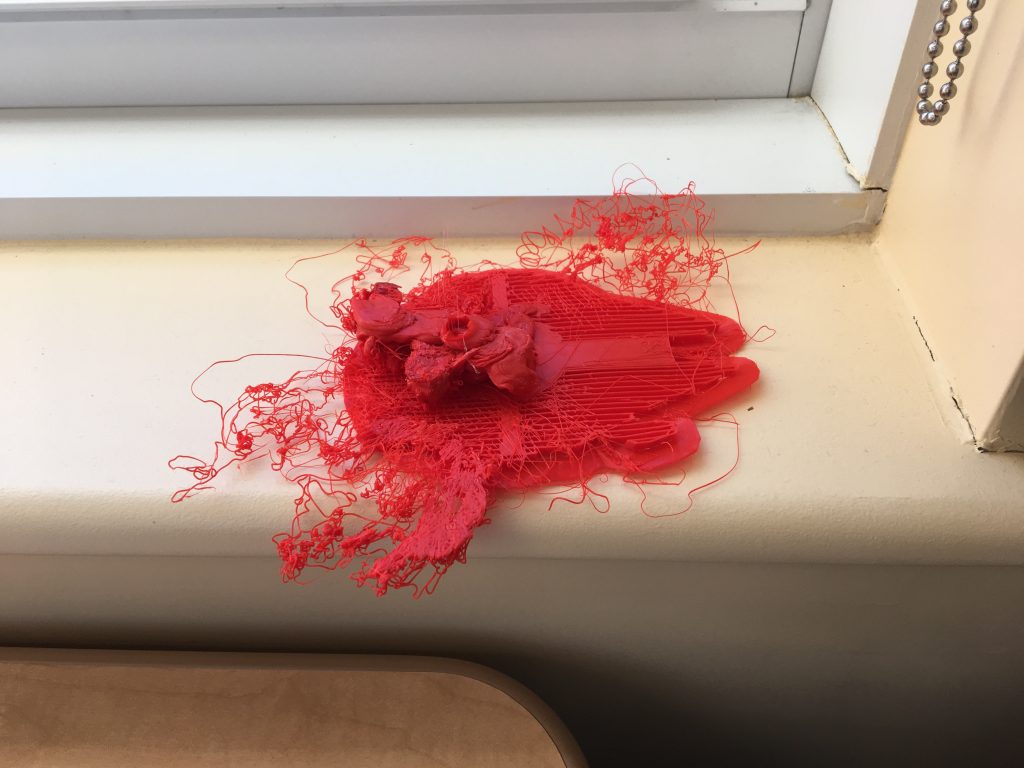
I told the student that the Dark Side of the Force was at work on his failed Star Wars Imperial Destroyer print.
The basic workflow we have used is that students go to thingiverse.com and select a design that is not too complex and that consists of one part. They download the CAD file that describes the object. They next “slice” the file using a free application called Cura (also from Ultimaker), which takes the 3D CAD drawing file and creates a printing directions file for the specific 3D printer. Some students have also learned how to scale the object up or down in Cura.
Students or my parent helper (see below) take the printer file and transfer it to an SD card that can be inserted into the printer. I just purchased a second SD card so we can have one object printing and copy files to there other SD card at the same time.
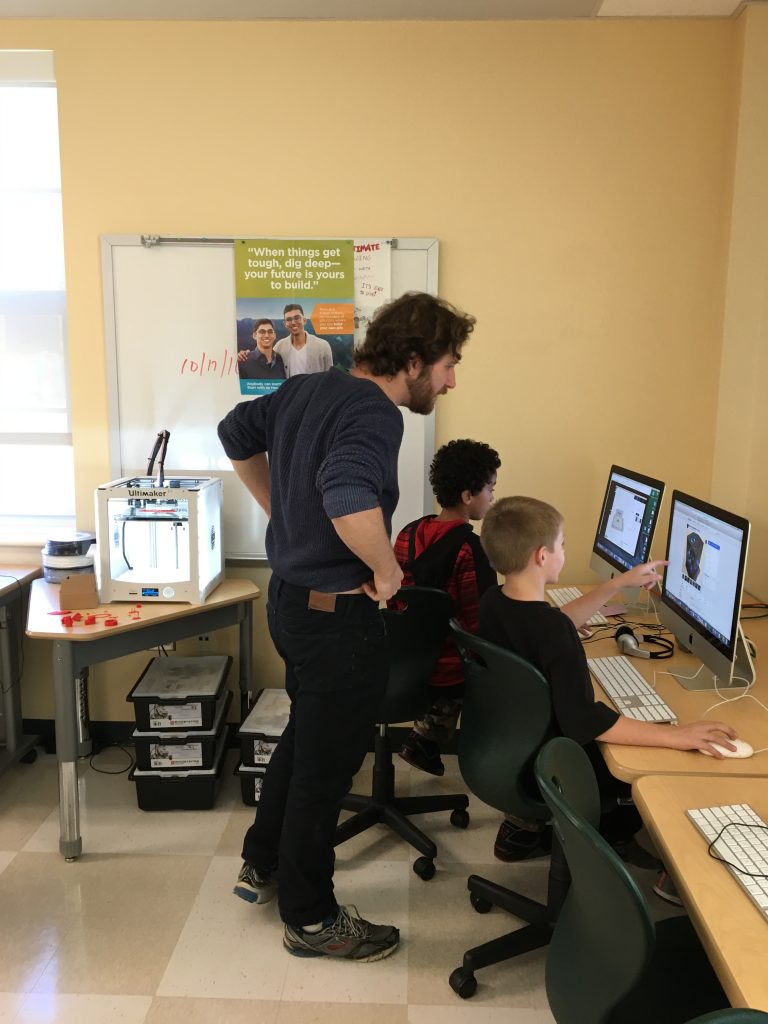
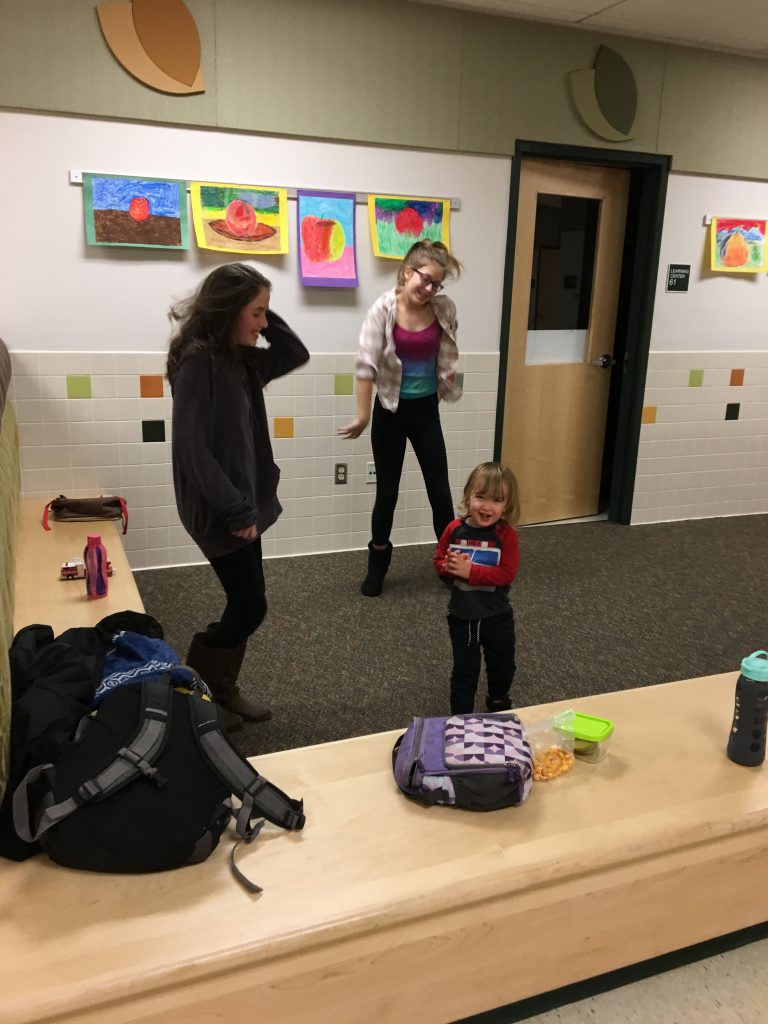
Parent helping students create 3D prints. Two sixth graders babysit this parent’s 2 year old son for an hour during Maker Space. While this may not directly be considered part of Maker Space, in a broader sense it is, because we are giving students experiences with things they are good at and are also personally interested in.
We load up the SD card(s) with files that are ready to print and I then print them during the following week during the day and overnight.
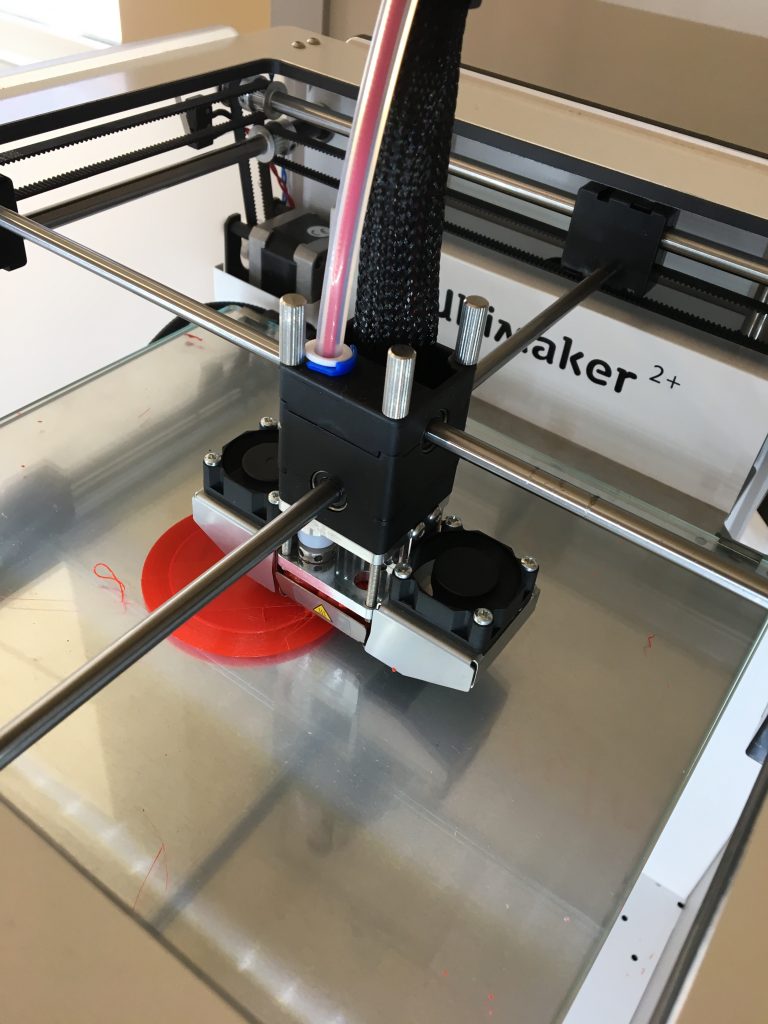
3D printer in action
I wrote up the process directions for older students in 2 versions. One is simple and does not include customizing designs.
3D Printing Directions Simple (PDF)
The other includes making customized items.
3D Printing Directions Full (PDF)
We have created a Google Document to keep track of the 3D prints.
There have been some interesting things happening with 3D printing and students. One of these is a constant parade of students, mostly sixth graders, that continually stop in the tech lab to check on the 3D printer and what it is currently printing. With its open design, it is easy and fascinating to watch the Ultimaker 2+ print. I find myself doing the same thing. Gradually, more and more students have become interested in printing an object they choose. I assume that word gets around when students show their printed objects to other students.
For whatever reason, many of the students that are constantly coming into the lab to check on the 3D printer have learning disabilities of some type. Many of them are also very talented with all things mechanical and many (but not all) also are boys. For whatever reason, these students have been fascinated with 3D printing and I have encouraged their interest. One boy, in particular, I have made my 3D printing helper and he is mastering the process and becoming quite good at helping other students. I think that for students who find traditional schoolwork challenging but have other mechanical and hands-on talents, that opportunities to excel in school with things they are good at is very empowering and positive for them.
The SPED teacher of many of our the “3D printing kids” shared with me that it was hard, at times, to motivate the students during their math class. We decided to try and use their newly found and intense interest in 3D printing to help with their math motivation. Two natural mathematical concepts are great to illustrate with 3D printing. One is scale and the second is x, y, z coordinates. Students came into the lab and we showed how the printer uses x, y, z coordinates to print. We also had students scale some sample objects up and down to get at ratio, scale, and multiplication. This led naturally to measurement as well because Cura shows the dimensions of the current object and you scale by replacing one of the x, y, or z dimension measurements with a new value, which is then scaled proportionally in the other two dimensions.
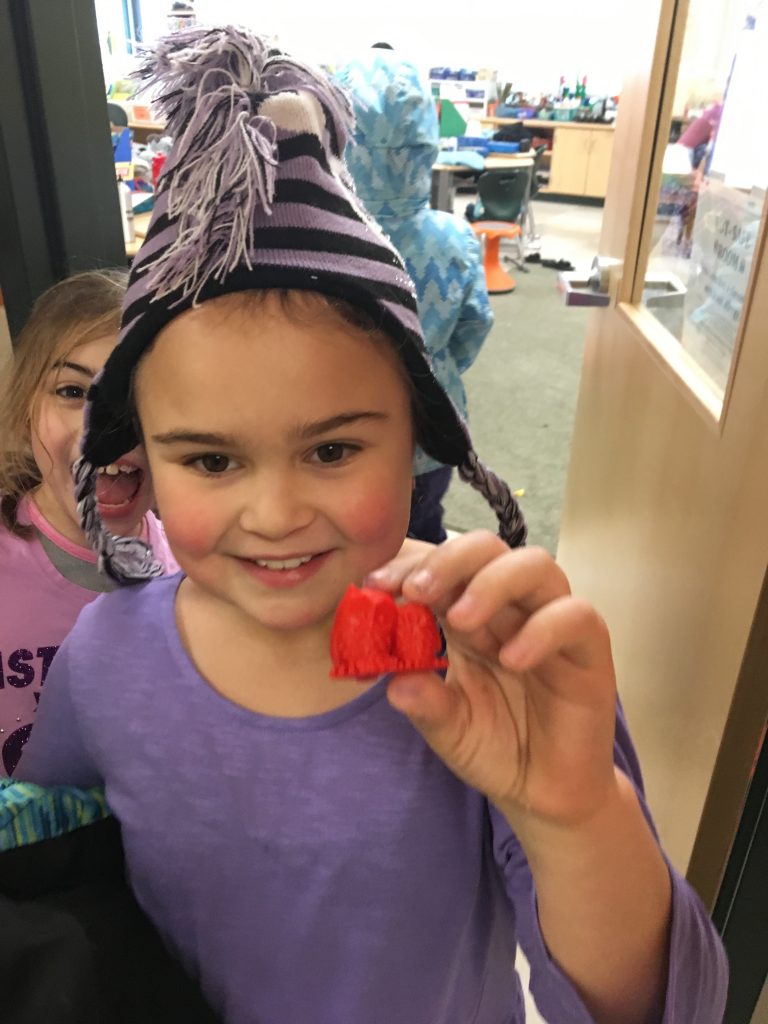
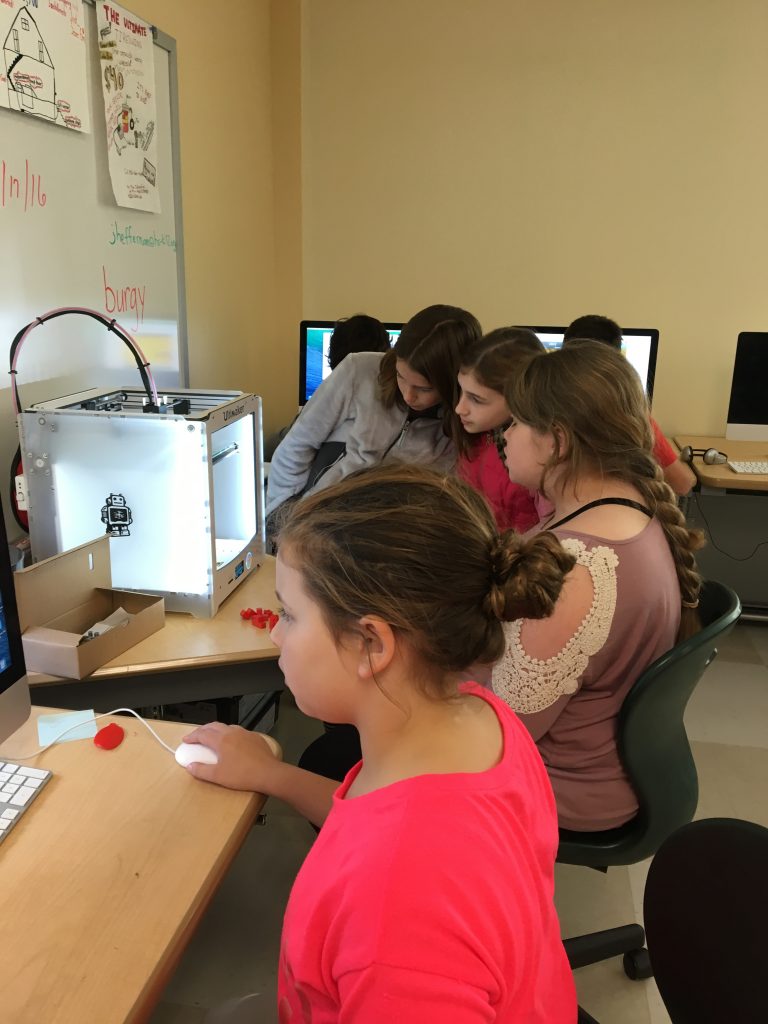
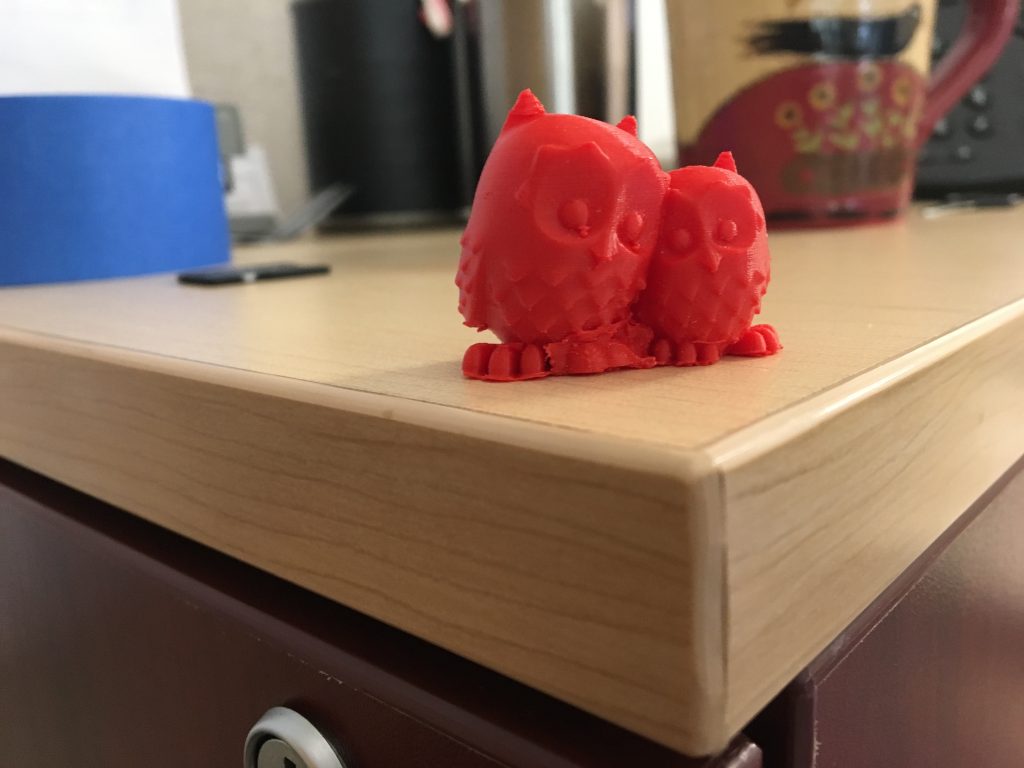
One thing the our Maker Space has really shown me is the importance of and joy in empowering kids to instantiate their own ideas, have a job they are good at, and pursue their own interests. More photos follow of students either using 3D printing or showing some of the objects they have made.
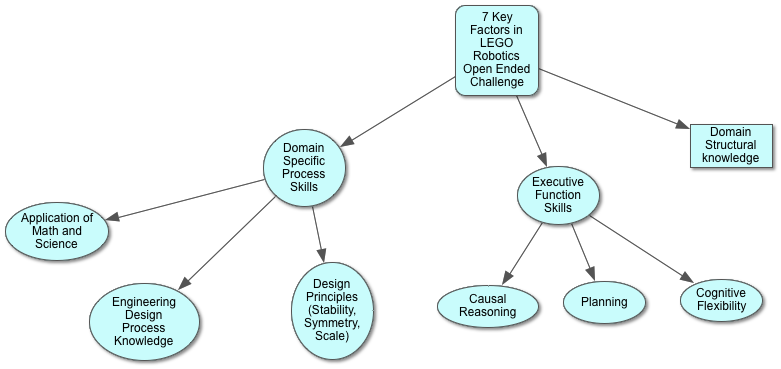
Development and gender were not significant factors in determining the EDP or the success of designs in this study with the exception of executive functions such as causal reasoning, which, in particular, showed some evidence of an age related component. Elementary students’ engineering design processes (EDP) were defined instead by build complexity and the overall tools that students brought to the task. These tools were found to be structural knowledge of LEGO and a combination of executive function (casual reasoning, planning ability, and cognitive flexibility) and domain specific process skills (EDP process knowledge, application of design principles of stability, symmetry, and scale, and application of mathematics and science). Note that three of these – structural knowledge, EDP process knowledge, and design principles – were found in the literature review as being utilized by experts. Since these particular factors did not appear to be developmental, this suggests that they could be taught to students explicitly. Additional research is needed to determine more accurately the relative importance of the different factors. See Figure 106 for a diagram of these key factors.
What are the primary implications of these findings? Students with high tools that choose a low complexity build had an idealized EDP without much need to research or evaluation. These students need a more challenging assignment. Students with low tools and a high complexity build may get stuck in research and may need scaffolding in planning, structural knowledge or other process skills. Other educational implications were found primarily on how to effectively scaffold the various process skills. For example, neutral questions or restating knowledge can trigger deep student learning.
Elementary engineering based on LEGO robotics in a K-6 yearly program showed rich affordances to develop student engineering and executive function skills. While not a part of this study, students also develop 21st century skills of collaboration, communication, and creativity. Additionally, students have shown high interest and enthusiasm for these open-ended engineering challenges based on LEGO and programming. My hope is that this study has provided significant characterization, insight, and implications for teaching elementary engineering to help sustain the natural interest and ability of young children to design, build, and program to help overcome the complex problems of today.
Kidsengineer.com was down for a few days due to a hack. Sorry for the inconvenience. I am still doing some cleanup. It’s really hard to keep up with this stuff yourself. I ended up using a service to restore my site after these attacks.
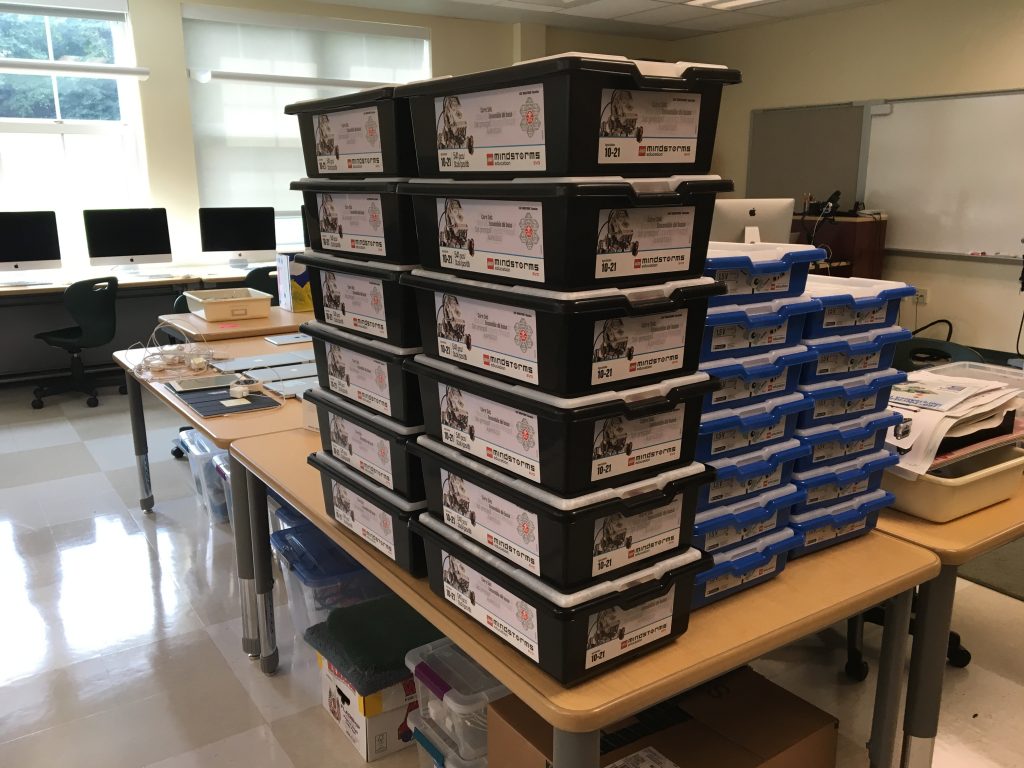
New kits for school LEGO EV3 and LEGO WeDo 2. It’s going to be a fun year!
THE WHITE HOUSE
Office of the Press Secretary
FOR IMMEDIATE RELEASE
August 22, 2016
President Obama Honors Outstanding Mathematics and Science Teachers
WASHINGTON, DC — President Obama today named 213 mathematics and science teachers as recipients of the prestigious Presidential Award for Excellence in Mathematics and Science Teaching. These awardees represent all 50 states, the District of Columbia, Puerto Rico, U.S. Territories, and the Department of Defense Education Activity schools. The educators will receive their awards at a ceremony in Washington, DC on September 8.
The Presidential Award for Excellence in Mathematics and Science Teaching is awarded to outstanding K-12 science and mathematics teachers from across the country. The winners are selected by a panel of distinguished scientists, mathematicians, and educators following an initial selection process at the state level. Each nomination year of the award alternates between teachers in the kindergarten through 6th grade level, and those teaching 7th through 12th grades. The cohort of awardees named today represent two nomination years, one of teachers in kindergarten through 6th grade classrooms and the other in 7th through 12th grade classrooms.
Winners of this Presidential honor receive a $10,000 award from the National Science Foundation to be used at their discretion, and are invited to Washington, DC, for an awards ceremony, as well educational and celebratory events, and visits with members of the Administration.
“The recipients of this award are integral to ensuring our students are equipped with critical thinking and problem-solving skills that are vital to our Nation’s success,” President Obama said. “As the United States continues to lead the way in the innovation that is shaping our future, these excellent teachers are preparing students from all corners of the country with the science, technology, engineering, and mathematics skills that help keep us on the cutting-edge.”
President Obama and his Administration have taken significant steps to strengthen education in science, technology, engineering, and math (STEM) fields in order to fully harness the promise our Nation’s students. The President’s Educate to Innovate campaign, launched in November 2009, has resulted in more than $1 billion in private investment for improving K-12 STEM education. Additionally, in 2011, the President set an ambitious goal to put 100,000 additional excellent STEM teachers in America’s classrooms by 2021. Thanks to the work of more than 280 organizations, 30,000 new STEM teachers have already been trained, and resources are in place to train an additional 70,000 STEM teachers by 2021. In parallel, the President has called for increasing the proficiency of America’s existing STEM teachers with a Master Teacher Corps initiative, which would identify the most effective K-12 STEM teachers and support them in a program to propagate their best practices with their peers. You can read more about the President’s commitment to science, technology, and innovation HERE.
The recipients of the Presidential Award for Excellence in Mathematics and Science Teaching are listed below, by nomination cohort and then by state.
To learn more about these extraordinary teachers, please visit: https://recognition.paemst.org
Grades K-6 Award Cohort
Alabama
Kimberly Bowen, Rainbow Elementary School, Mathematics
Julie Neidhardt, Dawes Intermediate School, Science
Alaska
Joey Jigliotti, Alpenglow Elementary School, Science
MaryLee Tung, Sand Lake Elementary School, Mathematics
Arizona
Tabetha Finchum, Centennial Elementary School, Mathematics
Janice Mak, Fireside Elementary School, Science
Arkansas
Ashley Kasnicka, Harvey Jones Elementary School, Mathematics
Cassie Kautzer, Monitor Elementary School, Science
California
Andrew Kotko, Mather Heights Elementary School, Mathematics
Erica Rood, CHIME Charter School, Science
Colorado
Dawn Bauer, Carson Elementary School, Science
Carolyn Jordan, Normandy Elementary School, Mathematics
Connecticut
Liesl Fressola, Sandy Hook Elementary School, Science
Nicole Gilson, Peck Place School, Mathematics
Delaware
Kristin Gray, Richard A. Shields Elementary School, Mathematics
Kimberly Simmons, W. Reily Brown Elementary School, Science
District of Columbia
Kristina Kellogg, Watkins Elementary School, Mathematics
Michael Mangiaracina, Brent Elementary School, Science
DoDEA
Bridget Lester, Ft. Rucker Primary School, Science
Rebecca Sterrett, Ramstein Elementary School, Mathematics
Florida
Janet Acerra, Forest Lakes Elementary School, Science
Angela Phillips, Chets Creek Elementary School, Mathematics
Georgia
Amanda Cavin, Unity Grove Elementary School, Mathematics
Steven King, Whit Davis Elementary School, Science
Hawaii
Eliza Akana Yoshida, Pu’u Kukui Elementary School, Mathematics
Stan Mesina, August Ahrens Elementary School, Science
Idaho
Giselle Isbell, Anser Charter School, Mathematics
Linda Truxel, Barbara Morgan Elementary School, Science
Illinois
Catherine Ditto, Burley Elementary School, Mathematics
James O’Malley, Thomas A. Edison Elementary School, Science
Indiana
Martin Briggs, Crichfield Elementary School, Mathematics
Kristen Poindexter, Spring Mill Elementary School, Science
Iowa
Ann Johnson, Sageville Elementary School, Mathematics
Joshua Steenhoek, Jefferson Intermediate School, Science
Kansas
Michelle Kelly, Basehor Elementary School, Mathematics
Brandi Leggett, Prairie Ridge Elementary School, Science
Kentucky
Vivian Bowles, Kit Carson Elementary School, Science
Gina Kimery, Farmer Elementary School, Mathematics
Louisiana
Mary Legoria, Westdale Heights Academic Magnet School, Science
Kristen Mason, L. W. Ruppel Academy for Advanced Studies, Mathematics
Maine
Lauree Gott, Veazie Community School, Science
Laura Stevens, Dora L. Small Elementary School, Mathematics
Maryland
Hilarie Hall, The Woods Academy, Science
Jennifer Kiederer Lawrence, Warren Elementary School, Mathematics
Massachusetts
John Heffernan, Anne T. Dunphy School, Science
Karen Schweitzer, Anne T. Dunphy School, Mathematics
Michigan
Gary Koppelman, Blissfield Elementary School, Science
Francie Robertson, Pine Tree Elementary, Mathematics
Minnesota
Frances Stang, O. H. Anderson Elementary School, Science
Carissa Tobin, Nellie Stone Johnson Community School, Mathematics
Mississippi
Karin Bowen, Brandon Middle School, Mathematics
Vicki Moorehead, St. Anthony Catholic School, Science
Missouri
Nancy McClintock, Center for Creative Learning, Science
Katherine Schack, Lakeview Elementary School, Mathematics
Montana
Kara Nelson, Meadowlark Elementary School, Mathematics
Colleen Windell, Lolo Middle School, Science
Nebraska
Amy Falcone, Hillside Elementary School, Mathematics
Kyla Hall, Kloefkorn Elementary School, Mathematics
Nevada
Arvella Jergesen, Fernley Intermediate School, Mathematics
Kathleen Schaeffer, Bob Miller Middle School, Mathematics
New Hampshire
Rebecca Cummings, Pelham Elementary School, Science
Ann Gaffney, Londonderry Middle School, Mathematics
New Jersey
Julia Ogden, Woodcliff Middle School, Science
Coshetty Vargas, Washington Park School, Mathematics
New Mexico
Cynthia Colomb, Hermosa Middle School, Science
Bernadine Cotton, Tombaugh Elementary School, Mathematics
New York
Eliza Chung, The School at Columbia University, Mathematics
Lisbeth Uribe, The School at Columbia University, Science
North Carolina
Justin Osterstrom, Martin Gifted and Talented Magnet Middle School, Science
Kayonna Pitchford, Stoney Point Elementary School, Mathematics
North Dakota
Loni Miller, Saxvik Elementary School, Science
Angela Stoa-Lipp, Kennedy Elementary School, Mathematics
Ohio
Marcy Burns, Main Street Intermediate School, Science
Susan Dankworth, Thomas E. Hook Elementary School, Mathematics
Oklahoma
Rebekah Hammack, Stillwater Middle School, Science
Moriah Widener, Jenks West Intermediate School, Mathematics
Oregon
Maureen Murphy-Foelkl, Chapman Hill Elementary School, Science
Sarah Luvaas, Redland Elementary School, Mathematics
Pennsylvania
Karen Bungo, Horace Mann Elementary School, Mathematics
Geoffrey Selling, Germantown Friends School, Science
Puerto Rico
Esther Alvarez-Meléndez, Academia San Ignacio de Loyola, Science
Carmen Olmo, Saint John’s School, Mathematics
Rhode Island
Barbara Pellegrino, Harold F. Scott Elementary School, Mathematics
Debra Turchetti-Ramm, Sarah Dyer Barnes Elementary School, Science
South Carolina
Tammy Joiner, Little Mountain Elementary School, Mathematics
Rebecca Strong, Thomas C. Cario Middle School, Science
South Dakota
Roby Johnson, Holgate Middle School, Science
Crystal McMachen, East Middle School, Mathematics
Tennessee
Theresa Feliu, John Adams Elementary School, Mathematics
Nicole Resmondo, Gresham Middle School, Science
Texas
Erika Hassay, Live Oak Elementary School, Mathematics
Celena Miller, Cesar Chavez Elementary School, Science
U.S. Territories
Fina Leon Guerrero, Manuel Ulloa Lujan Elementary School, Mathematics
Richard Carlos Velasco, FBLG Middle School, Mathematics
Utah
Jalyn Kelley, Wilson Elementary School, Mathematics
Britnie Powell, Salt Lake Center for Science Education, Science
Vermont
Laura Botte Fretz, Edmunds Middle School, Mathematics
Lisa Marks, Ludlow Elementary School, Science
Virginia
Barbara-Ann Adcock, Pocahontas Elementary School, Science
Eric Imbrescia, Peak View Elementary School, Mathematics
Washington
Meredith Gannon, Sacajawea Elementary School, Science
Deborah Halperin, Laurelhurst Elementary School, Mathematics
West Virginia
Cynthia Evarts, Orchard View Intermediate School, Mathematics
Nancy Holdsworth, New Manchester Elementary School, Science
Wisconsin
Lori Baryenbruch, River Valley Elementary Spring Green, Science
Tina Parker, Sam Davey Elementary School, Mathematics
Wyoming
Gayla Hammer, Lander Middle School, Science
Nancy Windholz, Saratoga Elementary School, Mathematics
Grades 7-12 Award Cohort
Alabama
Ryan Reardon, Jefferson County International Baccalaureate School, Science
Joel White, Brooks High School, Mathematics
Alaska
Christopher Benshoof, Lathrop High School, Mathematics
Catherine Walker, Romig Middle School, Science
Arizona
Marizza Bailey, BASIS Scottsdale, Mathematics
Michael McKelvy, Basha High School, Science
Arkansas
Daniel Moix, Bryant High School, Mathematics
Diedre Young, Ridgway Christian High School, Science
California
Maria McClain, Deer Valley High School, Mathematics
Michael Towne, Citrus Hill High School, Science
Colorado
Lisa Bejarano, Aspen Valley High School, Mathematics
Jessica Noffsinger, STEM Magnet Lab School, Science
Connecticut
Richard Broggini, Smith Middle School, Science
Elizabeth Capasso, Jettie S. Tisdale School, Mathematics
Delaware
Robin Corrozi, Cape Henlopen High School, Mathematics
John Scali, MOT Charter High School, Science
District of Columbia
Shira Printup, McKinley Technology High School, Mathematics
Melanie Wiscount, McKinley Technology Education Campus, Science
DoDEA
Michal Turner, Vicenza Middle School, Mathematics
Florida
Tracy Smith, Bak Middle School of the Arts, Science
Kelly Zunkiewicz, Dr. Earl J. Lennard High School, Mathematics
Georgia
Marc Pedersen, Paulding County High School, Science
Cindy Apley Rose, Couch Middle School, Mathematics
Hawaii
Alicia Nakamitsu, Aiea High School, Mathematics
Bryan Silver, Kalani High School, Science
Idaho
Jason George, Vision Charter School, Science
Micah Lauer, Heritage Middle School, Science
Illinois
Michael Fumagalli, East Leyden High School, Science
Lisa Nicks, Thornton Township High School, Mathematics
Indiana
Hugh Ross, Guerin Catholic High School, Science
Michael Spock, Columbus North High School, Mathematics
Iowa
Lynnetta Bleeker, Parkview Middle School, Science
Richard Brooks, Johnston High School, Mathematics
Kansas
Trissa McCabe, Reno Valley Middle School, Mathematics
Denise Scribner, Eisenhower High School, Science
Kentucky
Carly Baldwin, Boyd County High School, Science
Christine Bickett, North Bullitt High School, Mathematics
Louisiana
Linda Messina, Saint Joseph’s Academy, Science
Donna Patten, West Monroe High School, Mathematics
Maine
Marielle Edgecomb, Peninsula School, Mathematics
Cary James, Bangor High School, Science
Maryland
Elizabeth Lazaro, Buck Lodge Middle School, Science
Elizabeth Megonigal, Huntingtown High School, Science
Massachusetts
Neil Plotnick, Everett High School, Mathematics
Keith Wright, The Springfield Renaissance School, Science
Michigan
Brian Langley, Novi High School, Science
Wendy Osterman, Sashabaw Middle School, Mathematics
Minnesota
Morgan Fierst, South High, Mathematics
Lisa Houdek, Central Senior High School, Science
Mississippi
Marshall Hobbs, Jackson Preparatory School, Science
Lauren Zarandona, Mississippi School for Mathematics and Science, Mathematics
Missouri
Carol Robertson, Fulton High School, Science
Deanna Wasman, David H. Hickman High School, Mathematics
Montana
Jessica Anderson, Powell County High School, Science
Kerry Gruizenga, Skyview High School, Mathematics
Nebraska
Nicole Miller, Lakeview Jr-Sr High School, Science
Gregory Sand, Central High School, Mathematics
New Hampshire
Robin Ellwood, Rye Junior High School, Science
Patrick Kaplo, Windham High School, Science
New Jersey
Victoria Gorman, Medford Memorial Middle School, Science
Amy Mosser, Seneca High School, Mathematics
New Mexico
Kathleen Boerigter, Los Alamos High School, Science
Kevin Gant, Nex+Gen Academy, Science
New York
Daniel Mattoon, Niskayuna High School, Mathematics
Amanda Zullo, Saranac Lake High School, Science
North Carolina
Lauren Baucom, Forest Hills High School, Mathematics
Karen Newman, Durham Academy, Science
North Dakota
Jonathan Fugleberg, May-Port CG High School, Mathematics
Michelle Strand, West Fargo High School, Science
Ohio
Amy Roediger, Mentor High School, Science
Beth Vavzincak, Normandy High School, Mathematics
Oklahoma
Teri Kimble, Hydro-Eakly Middle School/High School, Science
Jamie Rentzel, Norman High School, Mathematics
Oregon
Katharine Dean, Centennial High School, Science
Brian Hanna, Newport High School, Mathematics
Pennsylvania
Elizabeth Allen, Saucon Valley High School, Mathematics
Jaunine Fouché, Milton Hershey School, Science
Puerto Rico
Nelson Franqui Flores, Saint John’s School, Mathematics
Keyla Soto Hidalgo, University High School, Science
Rhode Island
Anthony Borgueta, Barrington Middle School, Science
Kristen Jahnz, Cumberland High School, Mathematics
South Carolina
Gail Vawter, Springfield Middle School, Science
Jennifer Wise, Hand Middle School, Mathematics
South Dakota
Jennifer Fowler, South Middle School, Science
Bjorg Remmers-Seymour, East Middle School, Mathematics
Tennessee
Laura Darnall, Goodpasture Christian School, Science
Mary Vaughan, Oak Ridge High School, Mathematics
Texas
Patty Hill, Kealing Middle School, Mathematics
Cara Johnson, Allen High School, Science
U.S. Territories
Thora Henry Letang, Bertha C. Boschulte Middle School, Science
Dora Borja Miura, Saipan Southern High School, Mathematics
Utah
Magdalene Huddleston, Sand Ridge Junior High, Science
Vicki Lyons, Lone Peak High School, Mathematics
Vermont
Katherine McCann, U-32 Middle High School, Mathematics
Mary Louise McLaughlin, Barre Town Middle and Elementary School, Science
Virginia
Kelle Lyn Scott, Robinson Secondary School, Mathematics
Camilla Walck, Princess Anne High School, Science
Washington
Scott Cooley, University High School, Mathematics
Jeffery Wehr, Odessa High School, Science
West Virginia
Maureen Miller, Hurricane Middle School, Science
Sarah Snyder, Fairmont Senior High School, Mathematics
Wisconsin
Juan Botella, Monona Grove High School, Science
John Hayes, Northland Pines High School, Mathematics
Wyoming
Lesley Urasky, Rawlins High School, Science
Patricia Urasky, East High School, Mathematics